Taramani, OMR | Heritage & Culture
At the northern gateway of Chennai’s IT corridor stands one of the world’s most important repositories of Tamil printed heritage — and most OMR residents pass it every day without knowing it exists.

At the northern gateway of Chennai’s OMR corridor stands one of the world’s important repositories of Tamil printed heritage. Located inside the Central Polytechnic campus in Taramani, the Roja Muthiah Research Library preserves books, magazines, newspapers, cinema material, advertisements, manuscripts and everyday documents that record nearly three centuries of Tamil intellectual and social history.
Thousands of people travel through Taramani every day. Some are heading towards Tidel Park, Perungudi, Kandanchavadi, Thoraipakkam, Sholinganallur or Siruseri. Others commute to nearby colleges, research centres, government institutions and residential neighbourhoods.
Most people associate this part of Chennai with information technology, offices, education, transport and rapid urban development.
But hidden within this modern corridor is an institution dedicated to preserving the collective memory of Tamil society.
The Roja Muthiah Research Library, commonly known as RMRL, is situated inside the Central Polytechnic campus on Third Cross Road, Taramani. It functions not merely as a conventional library, but as a library, archive, museum, conservation centre and home to specialised research institutions.
Established in 1994, RMRL states that it now houses approximately 500,000 items representing major aspects of Tamil civilisation. It has also digitally preserved more than three million page images and operates an online digital library.
For residents of OMR, this is not a distant cultural institution located somewhere in central Chennai. It is part of the intellectual landscape of their own neighbourhood.
More than a conventional library
A conventional public library is generally associated with books that visitors can read or borrow.
RMRL serves a different and more specialised role.
It collects, catalogues, preserves, restores and digitises historical material related to Tamil language, literature, society, politics, medicine, religion, cinema, folklore, publishing and everyday life.
Its holdings include:
- Rare Tamil books
- Newspapers and magazines
- Government publications
- Pamphlets and handbills
- Political notices
- Wedding invitations
- Commercial advertisements
- Theatre material
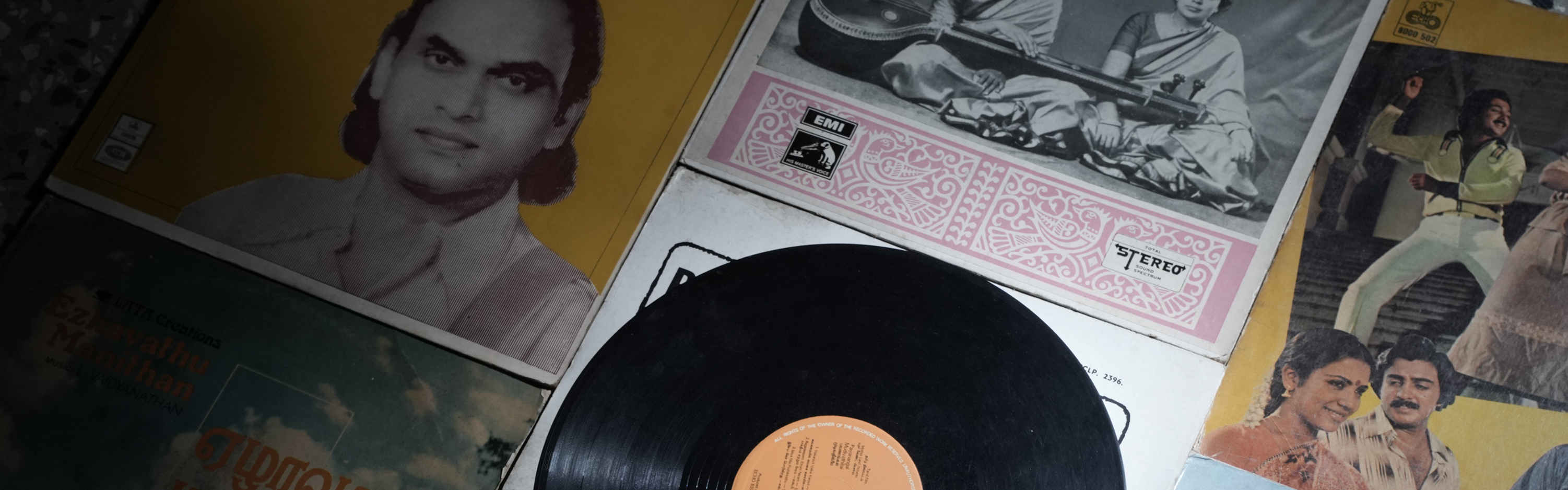
- Cinema posters and songbooks
- Photographs and negatives
- Audio recordings
- Gramophone records
- Palm-leaf manuscripts
- Personal collections
- Research papers
- Ephemeral printed objects
The word ephemera refers to material originally produced for temporary use. Invitations, posters, advertisements, notices, tickets and handbills were not usually expected to survive for generations.
Yet these objects often reveal aspects of history that cannot be understood from official records alone.
RMRL’s original Roja Muthiah collection remains the nucleus of the archive, but the institution has expanded through important donated collections belonging to writers, scholars and cultural figures. These include collections associated with Mu. Arunachalam, A. K. Ramanujan, T. P. Meenakshisundaram, Sa. Kandasamy and Sivasankari.
Who was Roja Muthiah?
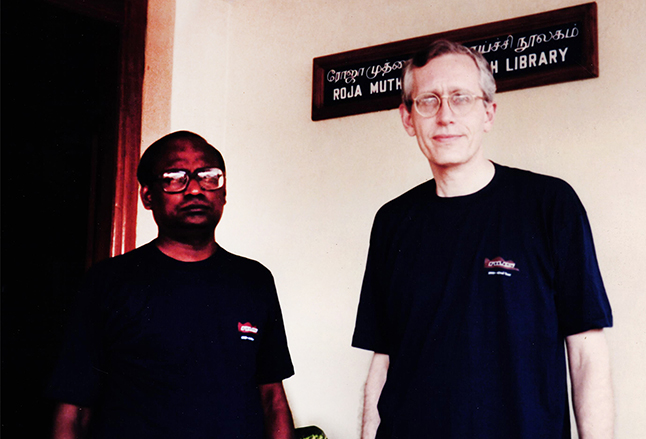
The institution is named after Roja Muthiah, a signboard artist and private collector from Kottaiyur in Tamil Nadu’s Sivaganga district.
He spent decades collecting Tamil printed material.
His collection was remarkable not only because of its size, but because of what he considered worthy of preservation.
He collected literary works and major publications, but he also saved small magazines, pamphlets, advertisements, invitations, newspaper cuttings, cinema-related material, popular publications and everyday printed records.
Such material was frequently ignored by traditional libraries and archives.
Roja Muthiah recognised that an old advertisement, public notice or cinema booklet could reveal how people spoke, dressed, purchased goods, participated in politics and understood the world around them.
After his death in 1992, there was a serious risk that the collection could be dispersed or lost. In 1994, the University of Chicago launched an initiative to acquire and preserve it. The collection was subsequently brought to Chennai, and the Roja Muthiah Research Library Trust was later established to maintain and expand it.
In 2005, the University of Chicago formally gifted the collection to the RMRL Trust.
What began as the dedication of one private collector eventually became a major institution for Tamil studies.
Why ordinary printed objects matter
History is often taught through major rulers, wars, laws and political movements.
But everyday objects reveal another layer of society.
An old shop advertisement may tell researchers what products people purchased, how goods were priced, what businesses existed, how brands communicated, which Tamil typefaces were popular, how ideas of modernity were presented, and how women, men and families were represented.
A wedding invitation may provide evidence about family and community networks, social customs, places and neighbourhoods, occupations, printing practices, language usage and changing forms of design.
A film songbook may document actors and performers, musicians and lyricists, production companies, typography, costume and visual style, film promotion and popular vocabulary.
A political pamphlet may show how ideas were communicated before television and social media.
A medical publication may help trace the history of indigenous medicine, public health and commercial healthcare.
By preserving both prestigious texts and ordinary printed matter, RMRL allows researchers to reconstruct Tamil history from multiple perspectives.
The first printed Tirukkural and other rare works
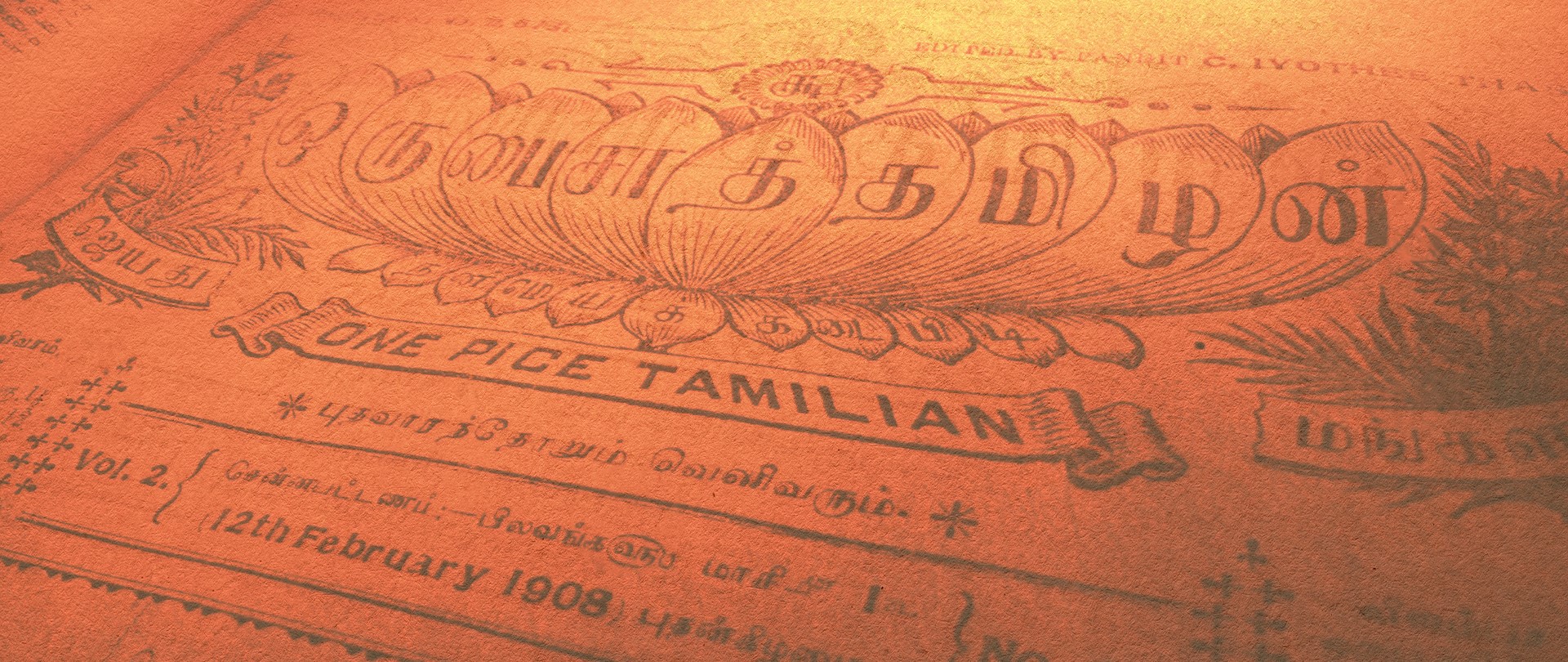
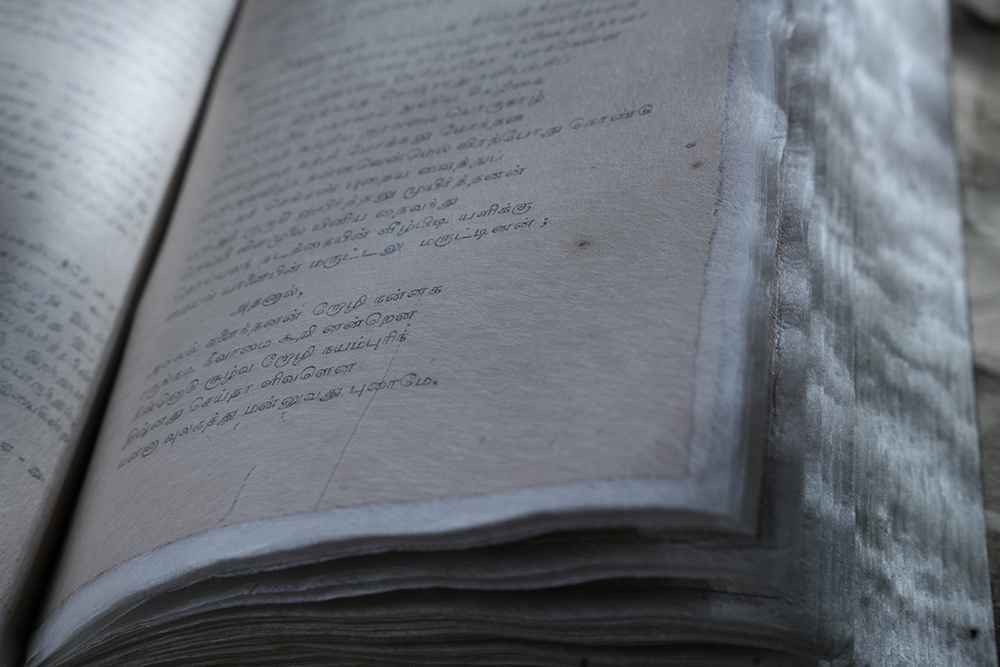
Among the major historical materials connected with RMRL is the 1812 printed edition of the Tirukkural, one of the earliest and most significant milestones in Tamil printing.
RMRL has produced a facsimile reproduction of the 1812 edition, allowing readers and researchers to study the appearance and structure of the historical printed work.
An original edition preserves details that may disappear from a modern reprint, including typography, page design, spelling conventions, publisher details, printing techniques, editorial notes, physical dimensions and paper characteristics.
These features help scholars understand not only the text itself, but also the development of Tamil printing.
The Tamil Knowledge Campus brochure describes RMRL’s collections as covering printed Tamil intellectual heritage extending across roughly 300 years, from early printed works to modern literature and audio-visual material.
Preserving fragile history
Historical books and documents face several threats.
Paper can deteriorate because of humidity, heat, dust, insects, water damage, acidification, poor-quality storage, repeated handling, adhesive tape and improper repair methods.
RMRL undertakes systematic preservation through conservation, cataloguing and digitisation.
Its preservation work includes:
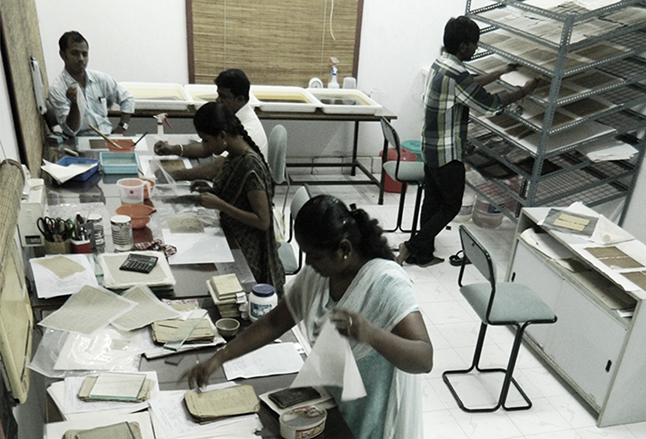
- Cleaning and stabilising documents
- Repairing damaged pages
- Creating archival-quality storage
- Digitising fragile material
- Producing searchable metadata
- Indexing periodicals
- Maintaining digital copies
- Supporting research access
RMRL states that it has indexed approximately 160,000 articles from Tamil periodicals covering subjects such as literature, indigenous medicine, religion, folklore, popular culture, Gandhian studies, gender studies and modern history.
The library also catalogues resources using the international MARC21 bibliographic standard and contributes records to larger research catalogues.
A full-fledged conservation studio was established in 2015 with support from the Navajbai Ratan Tata Trust.
The scale of the collection
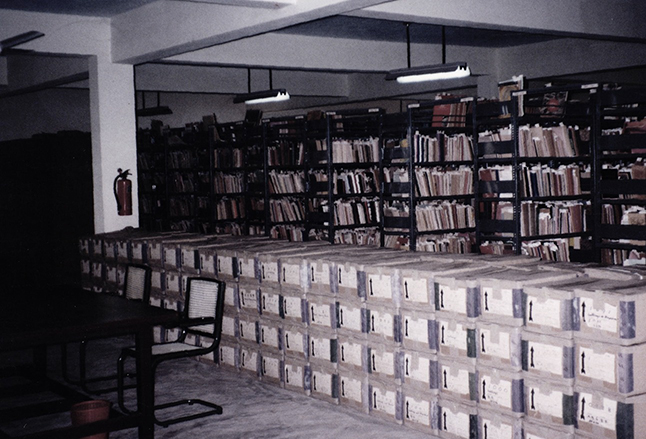
Beyond the conservation studio, RMRL’s physical holdings represent one of the largest consolidated archives of Tamil print culture anywhere in the world. Researchers working inside the stacks encounter not only bound volumes but periodical runs, boxed ephemera, personal papers and specialised collections that together map how Tamil society communicated, published and documented itself across generations.
A digital library accessible beyond Taramani
RMRL’s work is not confined to its physical building.
The institution operates an online catalogue where users can search books, periodicals and periodical indexes.
The catalogue helps researchers identify whether a particular work is available in the collection.
Its digital library includes separate sections for books, periodicals, official publications, personal collections, research papers, videos and external archival gateways.
Selected digitised Tamil books can be explored directly through the digital-library platform.
Not every item can necessarily be viewed in full online. Availability may depend on copyright, conservation status and access rules.
For OMR schools and colleges, the online catalogue offers a useful starting point for research assignments, heritage projects and student journalism.
Explore RMRL’s online catalogue and digital library.
Visit rmrl.inThe Indus Research Centre
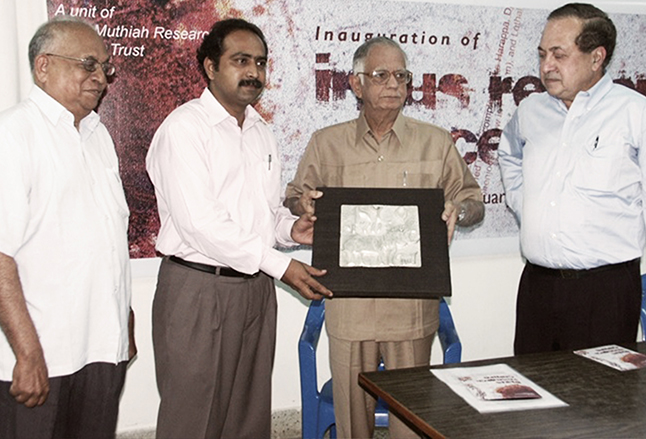
RMRL is also home to the Indus Research Centre, established in 2007 under the guidance of renowned epigraphist Iravatham Mahadevan.
The centre studies different aspects of the Harappan or Indus Valley Civilisation, particularly the still-undeciphered Indus script.
Its work involves archaeology, linguistics, epigraphy, palaeography, history, anthropology, geology and cultural studies.
The centre has collaborated with institutions including the Tata Institute of Fundamental Research, the Institute of Mathematical Sciences and international universities.
It has also developed digital tools such as:
- IndusScript portal — a digital corpus and concordance based on Iravatham Mahadevan’s work on the Indus script
- Tamil Nadu Graffiti portal — documenting ancient graffiti marks found on pottery in Tamil Nadu, developed in collaboration with the Tamil Nadu State Department of Archaeology
These tools demonstrate how an archive can combine archaeology, historical research and modern digital technology.
The Iravatham Mahadevan Chair
In 2025, the Government of Tamil Nadu established the Iravatham Mahadevan Chair at the Indus Research Centre.
The chair is intended to support advanced research and public engagement in Indus civilisation studies, Tamil epigraphy and related disciplines.
Planned activities include creating an expanded Indus concordance, conducting memorial lectures, publishing a journal on Indus studies, researching scripts and ancient Tamil literature, translating scholarly research into Tamil, organising exhibitions and lectures, and conducting courses for students and researchers.
The programme is also intended to improve access to this knowledge for schools and universities.
Centre for Study in Public Sphere
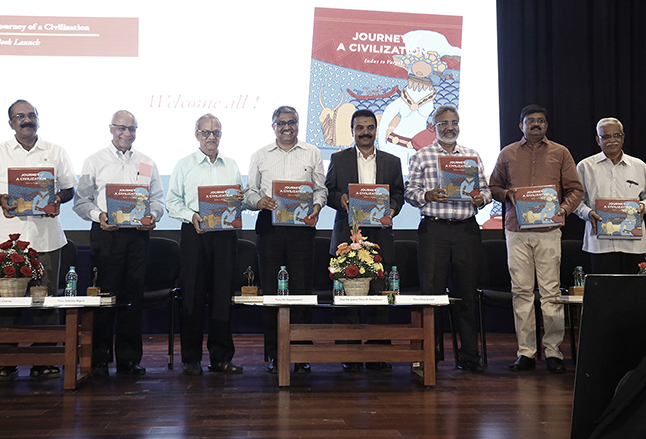
In 2021, RMRL established the Centre for Study in Public Sphere.
The centre examines how modern Tamil society developed through newspapers, magazines, pamphlets, political communication, social movements and public debate.
Before television, websites and social media, printed publications were among the primary channels through which ideas circulated.
Magazines, newspapers, posters and pamphlets helped shape discussions about social reform, caste, language, politics, religion, education, women’s rights, labour, cinema, literature and modernisation.
The centre uses archival material to trace the social transformation of modern Tamil Nadu.

Tamil Knowledge Campus: RMRL’s Next Major Step in Taramani
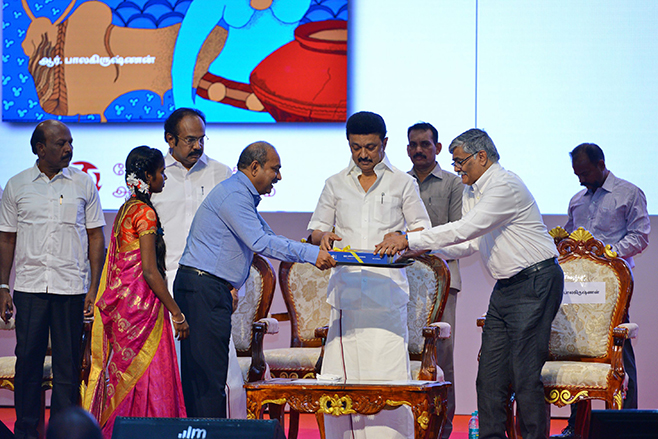
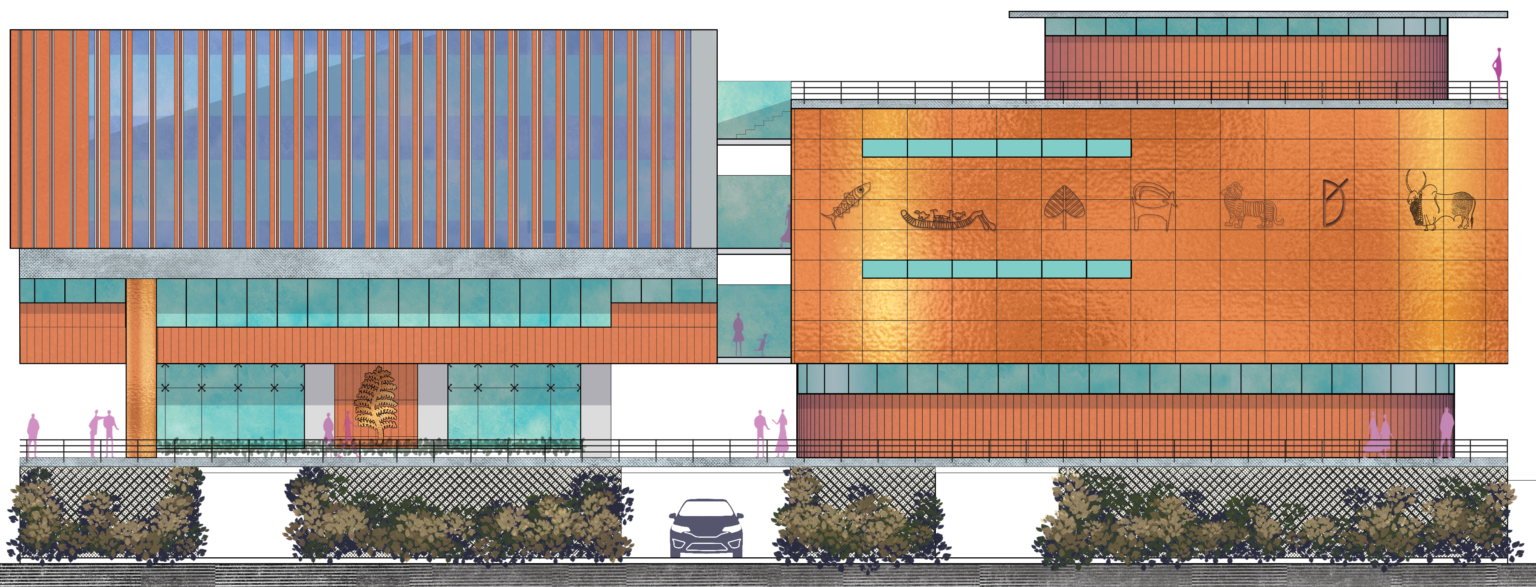
The Roja Muthiah Research Library is planning a major expansion called the Tamil Knowledge Campus, intended to develop RMRL from a specialised archive into a larger public-facing centre for Tamil knowledge, research, preservation and cultural education.
The proposed campus is significant for OMR residents because it could strengthen Taramani’s position not only as a technology and education hub, but also as a major centre for Tamil heritage and intellectual research.
According to RMRL, the proposed campus will bring together its library, archive, museum, conservation facilities, research centres, educational programmes and public activities within a more integrated institutional environment. The project is designed to support both preservation of historical material and the creation of new knowledge.
What the campus is expected to contain
The Tamil Knowledge Campus is envisioned as a larger multidisciplinary institution with facilities for:
- Rare books and archival collections
- Manuscripts, periodicals and ephemera
- Digital preservation and documentation
- Conservation laboratories
- Museum and exhibition spaces
- Research centres
- Seminar and workshop facilities
- Educational programmes
- Tamil computing and digital humanities
- Archaeology, linguistics and folklore research
- Public lectures and cultural events
RMRL describes the proposed campus as an intellectual hub that will preserve Tamil civilisation’s printed and material heritage while supporting research, publishing, teaching and public engagement.
A ₹30 crore cultural infrastructure project
RMRL’s donation page states that the Tamil Knowledge Campus has an estimated total project budget of ₹30 crore.
The institution has indicated that support is being sought from government, corporate organisations, foundations, philanthropists, Tamil communities worldwide and individual donors.
The official project page previously stated that construction was intended to begin in February 2025, subject to approvals. The current construction and approval status should be confirmed directly with RMRL before publication.
“Support one square foot”
The campaign uses a simple public-participation model.
RMRL estimates that constructing and completing the campus, including interiors, will cost approximately ₹5,000 per square foot. Supporters are invited to contribute toward one or more square feet of the proposed building.
The official message states that individuals may choose the number of square feet they wish to support and thereby participate in the creation of the institution.
This gives the campaign a strong public-awareness angle: a contribution of ₹5,000 is presented as support toward approximately one square foot of the future Tamil Knowledge Campus.
This should be described as RMRL’s donation model, not as the sale or ownership of physical floor area. Donations should be made only through payment details published on RMRL’s verified official website.
Why this matters to OMR residents
The Tamil Knowledge Campus could become an important cultural landmark at the northern gateway of OMR.
Its potential relevance extends to school students, college researchers, Tamil scholars, technology professionals, designers, filmmakers, journalists, archaeologists, writers, resident associations and corporate CSR teams.
For the OMR technology community, the campus could create opportunities connected with Tamil OCR, digital archives, metadata, language technology, archival search systems, digital exhibitions and long-term preservation.
For schools and colleges, it could provide structured exposure to original historical sources, conservation methods, archaeology, print history and research practice.
For residents, it could offer exhibitions, lectures and cultural programmes within the local corridor rather than only in central Chennai.
Public participation and CSR potential
Companies operating in Taramani, Perungudi, Kandanchavadi, Thoraipakkam, Sholinganallur and Siruseri could examine the project under their CSR, education, heritage-preservation or digital-inclusion programmes.
Possible areas of support include construction funding, conservation equipment, digitisation systems, archival storage, student programmes, public exhibitions, Tamil computing projects, accessibility infrastructure, research fellowships and digital-library development.
Residents and organisations should verify donation channels directly through RMRL’s official website before making payments.
Help build a Tamil knowledge landmark in Taramani
| Proposed project | Tamil Knowledge Campus |
| Location | RMRL, Central Polytechnic Campus, Taramani |
| Estimated project budget | ₹30 crore |
| Estimated construction contribution | ₹5,000 per square foot |
| Purpose | Library, archive, museum, conservation, research and public education |
| Official information | rmrl.in |
The campus represents an opportunity for OMR residents to see heritage preservation not as a distant government or academic activity, but as a community institution taking shape within their own neighbourhood.
A resource for OMR’s schools and students
Schools across Taramani, Thiruvanmiyur, Velachery, Perungudi and the wider OMR corridor can use RMRL to introduce students to primary-source research.
Students can learn how historians work with old books, newspapers, photographs, posters, advertisements, government records, manuscripts, audio recordings and personal documents.
Such exposure helps children understand that history is not simply a collection of memorised dates — it is reconstructed from surviving evidence.
Schools may explore pre-arranged visits, archival-awareness sessions, heritage clubs, exhibitions and student-research programmes in coordination with RMRL. Access should be confirmed in advance because archival institutions may have specific procedures for group visits and research use.
A resource for the OMR technology community
RMRL’s work also has direct relevance to the technology companies and professionals surrounding it.
Potential fields of collaboration include:
- Tamil optical character recognition
- Digital preservation and searchable archives
- Metadata systems and AI for document discovery
- Handwriting recognition and digital restoration
- Tamil-language computing and accessible digital exhibitions
- Long-term data storage and cybersecurity for cultural databases
Technology companies could support these areas through corporate social responsibility programmes, research partnerships or technical volunteering.
The presence of a major archive near Chennai’s IT corridor creates a natural opportunity to connect technological capability with cultural preservation.
A resource for designers, writers and filmmakers
Designers can draw on historical publications for Tamil typography, lettering, packaging, poster design, publication layouts, colour usage and visual communication.
Writers and journalists can use old newspapers, magazines and public notices to verify historical events and provide deeper context for contemporary stories.
Filmmakers can consult cinema songbooks, posters, promotional material and periodicals for research into the early history of Tamil cinema.
Local historians can use advertisements, notices, maps, photographs and government records to document the development of Chennai neighbourhoods.
The archive has previously supported research into early Tamil cinema and holds significant cinema-related material, including songbooks, periodicals and promotional literature.
A resource for MyOMR and local journalism
Community journalism should do more than report current events. It should also explain how neighbourhoods developed and how present-day issues connect with the past.
RMRL could support future MyOMR stories on subjects such as:
- The development of Taramani and the transformation of Old Mahabalipuram Road
- The history of South Chennai transport and the origins of neighbourhood names
- Early industries in the corridor and growth of educational institutions
- Historical flooding and water systems
- Evolution of Tamil advertising and cinema culture in Chennai
- Historical public-health campaigns and local political movements
- Forgotten writers and publishers
Access to archival sources can turn a basic local article into a properly documented historical report.
Protecting personal and community archives
Many families possess materials that may have historical value, including old photographs, letters, invitations, diaries, magazines, business records, association documents, school publications, community newsletters, property records and audio tapes.
These materials are often destroyed during house renovation, relocation or estate clearing. People may assume that an old printed object has no value because it appears ordinary. But if it is the only surviving record of a local organisation, business, event or neighbourhood, it may be historically significant.
Residents should avoid laminating old documents, applying adhesive tape, writing on photographs, washing damaged paper, storing documents in damp cupboards, exposing material to direct sunlight, or discarding collections without assessment.
Institutions with archival expertise should be consulted before major historical collections are destroyed or separated.
What OMR organisations can do
Resident welfare associations, schools, colleges and companies can contribute to awareness in practical ways.
- Circulate verified information about RMRL
- Arrange approved educational visits
- Invite archivists and researchers for lectures
- Support digitisation and conservation through CSR
- Sponsor exhibitions or student programmes
- Encourage local-history documentation
- Identify fragile community collections
- Develop Tamil-language technology projects
- Promote the digital catalogue among students
- Support the Tamil Knowledge Campus through verified channels
Planning a visit
Roja Muthiah Research Library
Fourth Floor, Integrated Workshop Building
Third Cross Road, Central Polytechnic Campus
Taramani, Chennai – 600113
Telephone: +91 44 2254 2551
Visitors should contact the institution or check its official website before travelling to confirm opening hours, reading-room access, research procedures, exhibition schedules, group-visit arrangements, holiday closures and accessibility requirements.
Roja Muthiah Research Library at a glance
| Established | 1994 |
|---|---|
| Location | Central Polytechnic Campus, Taramani |
| Type | Library, archive, museum and research institution |
| Collection | Approximately 500,000 items |
| Digitally preserved | More than three million page images |
| Major research centres | Indus Research Centre; Centre for Study in Public Sphere |
| Major proposed expansion | Tamil Knowledge Campus |
| Estimated campus budget | ₹30 crore |
| Contribution estimate | Approximately ₹5,000 per square foot |
| Official contact | +91 44 2254 2551 |
A cultural landmark hiding in plain sight
Many people living along OMR travel across Chennai to visit museums, heritage buildings and cultural institutions.
Yet one of Tamil Nadu’s most important knowledge repositories is already located at the entrance of their own corridor.
The proposed Tamil Knowledge Campus seeks to take this work further by creating a larger space for archives, museums, research, conservation, education and public participation.
Taramani should therefore be understood as more than a transport junction or an extension of Chennai’s IT corridor. It is also home to an institution safeguarding the printed memory of Tamil civilisation.
The first step towards protecting such a place is ensuring that the community knows it exists.