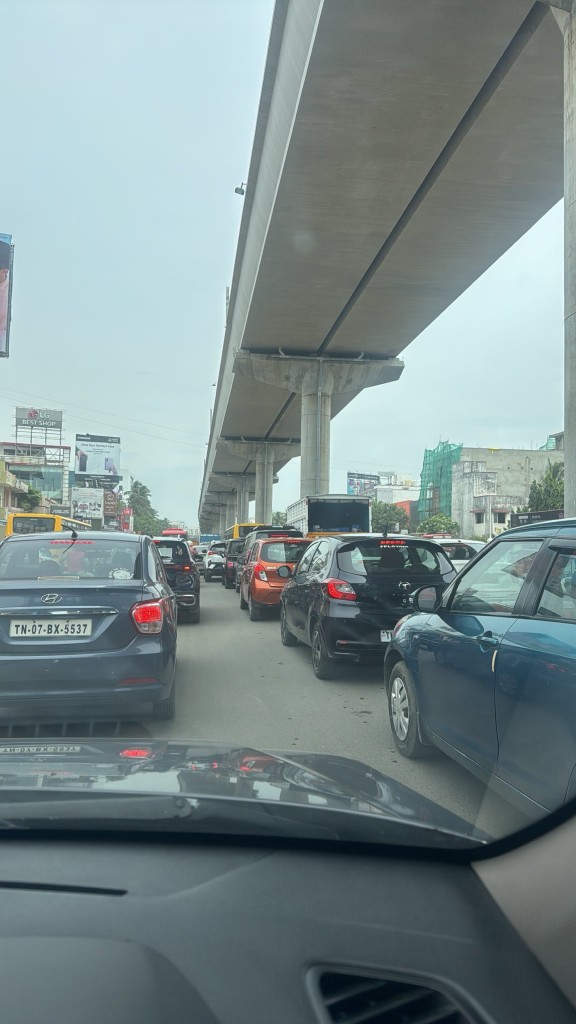
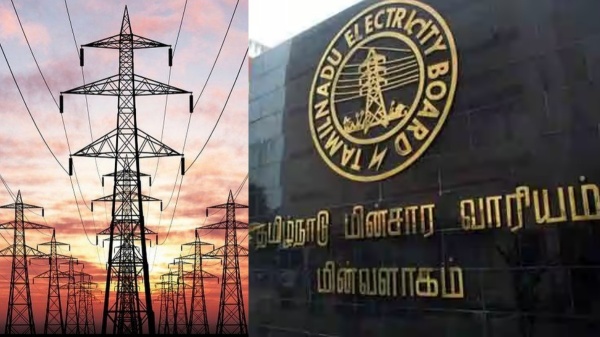
OMR / Chennai: Received a higher electricity bill this June? This guide explains Tamil Nadu EB bill calculation using realistic examples of an OMR household, a high-AC apartment, a ₹4,663 bill and a small commercial shop.
Many households and businesses across Chennai may now be receiving electricity bills that include power consumed during the peak April–May summer period.
For families living along Old Mahabalipuram Road, the difference may be immediately visible. Homes in Perungudi, Thoraipakkam, Karapakkam, Sholinganallur, Semmencherry, Navalur, Siruseri, Padur, Kelambakkam and Thiruporur often depend heavily on air conditioners, refrigerators, ceiling fans, laptops, water heaters and electric water pumps.
The OMR corridor also has thousands of small shops, clinics, salons, offices, tuition centres, restaurants and service establishments that use air conditioning, illuminated signboards, CCTV cameras and computer equipment throughout the day.
A higher bill does not necessarily mean that the electricity department has charged an arbitrary amount. The increase may result from higher units consumed, the applicable tariff category, movement into higher consumption slabs, arrears or an adjustment from an earlier assessment.
The correct way to understand an electricity bill is to examine the units first and the rupee amount second.
Why June Electricity Bills May Be Higher
Depending on the individual meter-reading schedule, a bill generated during June may include electricity consumed during some or all of April and May—among Chennai’s hottest months.
During this period:
- Air conditioners operate for longer hours.
- Ceiling fans run throughout the day and night.
- Refrigerators work harder because of higher room temperatures.
- Water consumption increases, causing pumps to operate more frequently.
- Children may be at home during school holidays.
- Work-from-home employees use computers and cooling systems during the day.
- Shops may extend AC and refrigeration operating hours.
- Apartment common-area motors, lifts and treatment plants may consume more power.
The resulting increase may therefore reflect accumulated summer usage across approximately two months.
What Is One Unit of Electricity?
One unit of electricity is equal to one kilowatt-hour, written as 1 kWh.
A 1,000-watt appliance running continuously for one hour theoretically consumes approximately one unit.
The basic formula is:
Units consumed = Appliance wattage × Hours used ÷ 1,000
For example, a 1,500-watt appliance operating for two hours would consume approximately:
1,500 × 2 ÷ 1,000 = 3 units
Actual consumption can vary because appliances such as air conditioners, refrigerators and water heaters do not always draw their rated power continuously.
How Does Tamil Nadu TNEB Bill Calculation Work?
Tamil Nadu domestic electricity bills are generally assessed once every two months. The final amount is not calculated by multiplying all the consumed units by one common rate.
Electricity charges depend on:
- Total units consumed
- Domestic or commercial tariff
- Applicable consumption slabs
- Free-unit benefit or subsidy
- Billing cycle
- Fixed charges, where applicable
- Sanctioned or contracted load
- Previous arrears
- Delayed-payment charges
- Assessment adjustments
- Other approved bill components
Eligible domestic consumers receive the applicable first-100-unit benefit during the bi-monthly billing cycle. However, the amount can rise more sharply when consumption crosses important thresholds, particularly when a household moves beyond 500 units.
This is why a household consuming 490 units and another consuming 510 units should not assume that their bills will differ only by the price of 20 units.
The TNEB 500-Unit Question
One of the most frequently searched questions is:
What happens when electricity consumption crosses 500 units in Tamil Nadu?
Crossing 500 units can change the applicable domestic billing structure. Consumers should not assume that only the units above 500 are affected in the same way as a simple flat-rate calculation.
The official bill calculator should be used with the exact consumed units and billing cycle to understand the payable amount. The 500-unit level is especially relevant to OMR apartments with one or more air conditioners.
Example 1: Moderate OMR Apartment Household
Consider a four-member family living in a two-bedroom apartment in Thoraipakkam or Sholinganallur. The household uses one air conditioner, three ceiling fans, a refrigerator, washing machine, water heater, television, two laptops, Wi-Fi router, kitchen appliances, lights and chargers.
Illustrative two-month consumption
| Appliance category | Estimated consumption |
|---|---|
| Air conditioner | 210 units |
| Fans and lights | 125 units |
| Refrigerator | 90 units |
| Water heater | 60 units |
| Washing machine | 30 units |
| Television, laptops and router | 60 units |
| Kitchen appliances | 40 units |
| Other usage | 35 units |
| Estimated total | 650 units |
This household has crossed the 500-unit level even though it operates only one air conditioner. The increase is caused by the combined effect of several appliances over sixty days.
How Much Is the TNEB Bill for 500, 600 or 800 Units?
Consumers frequently search for bill amounts corresponding to fixed unit levels. However, the amount should not be guessed from a single “per-unit rate.”
The correct method is:
- Confirm the connection is classified as domestic.
- Check the exact units printed on the bill.
- Select the correct billing cycle.
- Enter the units in the official bill calculator on the TNPDCL / TANGEDCO portal.
- Review subsidies, arrears and adjustments separately.
The same approach should be followed for 500, 600, 800, 1,000 or 1,500 units. Any amount presented without confirming the tariff category and current official structure should be treated only as an estimate.
Example 2: OMR Household Consuming Around 946 Units
Consider a family with two air conditioners in a two-bedroom or three-bedroom apartment. An earlier appliance-wise assessment produced an estimated consumption of approximately 946 units over two months.
Illustrative 946-unit breakup
| Appliance or load | Estimated two-month units |
|---|---|
| Two air conditioners | 440 units |
| Fans and lights | 125 units |
| Refrigerator | 90 units |
| Water heater | 65 units |
| Washing machine | 30 units |
| Television, computers and router | 65 units |
| Kitchen appliances | 45 units |
| Water pump and other loads | 86 units |
| Estimated total | 946 units |
An earlier broad bill estimate for this load ranged from approximately ₹6,500 to ₹10,300 under different tariff assumptions. The range was wide because the exact result depends on the prevailing tariff, subsidy treatment, billing cycle and bill components. Recalculate through the official TNEB bill calculator before payment.
How Can a Normal Family Reach 946 Units?
Two air conditioners alone can account for a substantial portion of the total. Assume each AC effectively consumes an average of 1.2 units per operating hour and runs for three hours daily:
2 air conditioners × 1.2 units × 3 hours × 60 days = 432 units
Fans, refrigerator, water heater, washing machine, laptops, television, kitchen equipment and water pumps can add another 400 to 500 units. The high total may therefore be the combined result of normal appliances operating for long durations.
Example 3: Adding Another 1-Ton AC
Now consider a family adding a 1-ton air conditioner to another bedroom, operating six to eight hours during the night. In our earlier high-use scenario, total bi-monthly consumption was estimated at approximately 1,350 to 1,575 units, with a practical bill range of approximately ₹11,000 to ₹13,500, subject to official calculation.
Illustrative high-consumption profile
| Appliance category | Estimated two-month units |
|---|---|
| Three air conditioners | 850–1,000 units |
| Fans and lights | 130 units |
| Refrigerator | 95 units |
| Water heater | 70 units |
| Washing machine | 35 units |
| Computers, television and router | 75 units |
| Kitchen appliances | 50 units |
| Pumps and miscellaneous loads | 45–120 units |
| Estimated total | 1,350–1,575 units |
This situation may apply to larger households, villas, shared apartments and work-from-home families using separate rooms throughout the day.
Why Air-Conditioner Usage Changes the Bill So Sharply
AC consumption depends on more than the number of hours displayed on the remote. Important factors include AC tonnage, star rating, inverter or non-inverter technology, room size, top-floor heat exposure, direct western sunlight, number of people in the room, temperature setting, dirty filters, refrigerant condition, age of the compressor, doors opening frequently and poor window sealing.
A top-floor apartment in Navalur or Padur receiving direct afternoon heat may require more cooling than a shaded lower-floor flat using the same AC model.
Example 4: Can Units Be Calculated from a ₹4,663 Bill?
Another real-world situation involved a consumer receiving a ₹4,663 electricity bill for two months. It may be possible to derive a rough range from the amount, but the exact units should not be calculated from the payable amount alone.
The bill may include energy charges, free-unit subsidy, fixed charges, previous arrears, delayed-payment charges, assessment corrections, meter-related adjustments and other credits or debits.
Check the bill for:
- Previous meter reading
- Current meter reading
- Units consumed
- Tariff code
- Billing dates
- Energy charges
- Subsidy
- Arrears or adjustments
- Total payable amount
Current meter reading − Previous meter reading = Units consumed
A ₹4,663 bill does not automatically correspond to one fixed unit value for every consumer.
Why You Should Read Units Before Rupees
“Last time I paid ₹2,500. This time it is ₹4,663.”
That comparison is incomplete. First compare units used in the previous billing cycle, units in the current cycle, number of billing days, same-season consumption from the previous year, tariff category, and arrears or adjustment entries.
A summer bill should preferably be compared with the previous summer, not with December or January consumption.
Example 5: Small Shop Electricity Bill Along OMR
Consider a small air-conditioned mobile-accessories shop, salon, clinic or service centre in Karapakkam, Sholinganallur or Kelambakkam.
Illustrative monthly consumption
| Equipment | Estimated monthly units |
|---|---|
| Air conditioner | 250–280 units |
| Internal lighting | 45 units |
| Signboard | 30 units |
| Computers and printer | 60 units |
| CCTV and Wi-Fi | 25 units |
| Fan and small equipment | 25 units |
| Refrigerator or dispenser | 20 units |
| Estimated total | 435–465 units |
A small shop may therefore consume around 450 units in one month, depending on working hours. Commercial electricity should not be calculated using domestic tariff slabs. The tariff code printed on the bill must be used in the official calculator.
Why a Shop Bill Can Remain High After Closing Time
Illuminated signboards, CCTV systems, network routers, refrigerators, freezers, outdoor lighting, emergency lighting, computers in standby mode, water dispensers and battery chargers may continue consuming electricity overnight.
A 500-watt combined overnight load running for 12 hours daily can consume:
0.5 kW × 12 hours × 30 days = 180 units per month
Timers and proper shutdown procedures can materially reduce such consumption.
Apartment Residents Must Separate Flat and Common-Area Bills
Electricity used inside an apartment is different from common-area electricity paid through maintenance.
Inside-flat consumption: air conditioners, fans, lights, refrigerator, water heater, washing machine, television, computers and kitchen appliances.
Common-area consumption: borewell pumps, sump and overhead-tank motors, lifts, sewage-treatment plant, water-treatment plant, corridor and basement lighting, CCTV cameras, security cabin, automatic gates, clubhouse facilities and outdoor lighting.
A resident may have a moderate individual EB bill but still pay a higher apartment-maintenance electricity charge. This is common in larger OMR apartment communities with multiple towers, deep borewells, lifts and treatment plants.
Water Pumps: A Major Hidden Load in OMR Buildings
Many OMR neighbourhoods depend on combinations of borewell water, tanker water, underground sumps and overhead tanks. Each movement of water requires electrical energy.
A one-horsepower pump may draw roughly 0.75 kilowatts under idealised conditions. If such a motor runs for three hours daily:
0.75 kW × 3 hours × 60 days = 135 units
Unexpected motor consumption may be caused by leaking pipelines, overflowing overhead tanks, faulty float switches, repeated pump starts, low borewell yield, inefficient motors, worn-out pump components, excessive water use and pressure loss.
Apartment associations should record daily motor-operating hours instead of looking only at the total common electricity bill.
Conduct a Seven-Day Meter Audit
Consumers who cannot identify the cause of a high bill can monitor the meter for seven days. Record the reading at the same time each day and note AC hours and pump or geyser usage.
| Day | Meter reading | Daily units | AC hours | Pump or geyser usage |
|---|---|---|---|---|
| Day 1 | — | — | — | — |
| Day 2 | — | — | — | — |
| Day 3 | — | — | — | — |
| Day 4 | — | — | — | — |
| Day 5 | — | — | — | — |
| Day 6 | — | — | — | — |
| Day 7 | — | — | — | — |
Compare heavy-AC days with normal days to reveal whether the increase comes from regular appliance use, one faulty appliance, continuous background load, water-pump operation, geyser usage or unexpected night-time consumption.
Test for Possible Continuous or Leakage Load
Switch off major appliances and observe the meter. Then, where safe and practical, switch off individual circuits one at a time through a qualified person. A meter continuing to record substantial usage after normal appliances are switched off may require further inspection.
How to Estimate Any Appliance’s Consumption
Use: Watts × Hours per day × Number of days ÷ 1,000
Ceiling-fan example: A 75-watt fan operating for 12 hours daily over 60 days: 75 × 12 × 60 ÷ 1,000 = 54 units. Three such fans: 54 × 3 = 162 units.
Water-heater example: A 2,000-watt heater operating for 30 minutes daily: 2,000 × 0.5 × 60 ÷ 1,000 = 60 units.
Signboard example: A 300-watt signboard operating for 12 hours daily over 30 days: 300 × 12 × 30 ÷ 1,000 = 108 units.
How to Check Your TNEB Bill Online
Consumers should use official TNPDCL or TNEB services to check bill status, view consumed units, download the bill, check transaction history, pay through Quick Pay, download payment receipts and use the bill calculator.
Keep the following details ready: service-connection number, registered mobile number, tariff category, consumed units, billing cycle and contracted load where applicable.
Avoid entering electricity-consumer information into unknown websites received through messages or social-media advertisements.
What to Do When the Bill Appears Incorrect
Before raising a complaint:
- Compare the current and previous meter readings.
- Photograph the physical meter.
- Verify the meter or service number.
- Check the tariff code.
- Check the number of units.
- Check the billing dates.
- Look for arrears.
- Look for adjustment entries.
- Compare with the same period in the previous year.
- Use the official bill calculator.
When a clear discrepancy remains, approach the concerned local electricity-section office with your consumer number, current bill, previous bill, meter photograph, payment receipts and written explanation.
OMR Electricity-Saving Measures for Homes
- Maintain AC temperature between 24°C and 26°C.
- Clean AC filters regularly.
- Use curtains to reduce afternoon heat.
- Seal gaps around windows.
- Avoid cooling empty rooms.
- Use ceiling fans to circulate cooled air.
- Switch off water heaters immediately after use.
- Repair leaking pipelines and check overhead-tank overflow.
- Replace inefficient lighting with LEDs.
- Shut down computers rather than leaving them in standby mode.
- Check refrigerator-door seals.
- Monitor daily meter readings during summer.
- Service old air conditioners and pumps.
Electricity-Saving Measures for Shops
- Set fixed AC operating hours.
- Keep the entrance closed while the AC operates.
- Use timers for signboards.
- Switch off display lighting after closing.
- Shut down computers and printers.
- Inspect refrigerator and freezer seals.
- Clean cooling equipment regularly.
- Separate overnight essential loads.
- Record opening and closing meter readings.
- Review sanctioned load before installing new equipment.
Should High-Consumption OMR Homes Consider Rooftop Solar?
Households regularly consuming 900, 1,300 or 1,500 units in a two-month cycle may assess the feasibility of rooftop solar. Solar may be suitable for independent houses, villas, low-rise apartment common areas, clinics, small offices, tuition centres and shops with daytime consumption.
Residential consumers can also examine the applicable subsidy support under the PM Surya Ghar programme. The widely publicised maximum central assistance for eligible residential systems can reach ₹78,000, depending on capacity and scheme conditions.
Read our detailed guide: OMR Rooftop Solar Push: Why Chennai Homes Should Check the ₹78,000 Solar Subsidy Now.
Solar does not cancel an already-generated bill. It is a long-term measure for reducing future grid consumption.
Solar and Battery Systems Are Not the Same
A rooftop-solar system generates electricity when sunlight is available. A battery stores electricity for later use. A small battery system may support selected fans, emergency lights, Wi-Fi router and CCTV cameras, but may not support multiple air conditioners, water heaters, large water pumps, lifts, induction cookers or commercial refrigeration.
Key Questions to Ask About a High Electricity Bill
- How many units were consumed?
- Is this a domestic or commercial connection?
- Did consumption cross 500 units?
- How many billing days are included?
- Was another AC added?
- Did AC operating hours increase?
- Did the water pump run more frequently?
- Is there an arrear or adjustment?
- Is common-area electricity being billed separately?
- Does the meter reading match the bill?
- How does consumption compare with last summer?
The Main Lesson for OMR Consumers
A ₹4,663 bill, a 650-unit apartment, a 946-unit household, a 1,500-unit high-AC home and a 450-unit shop are different cases. They cannot be calculated using one universal per-unit figure.
The final amount depends on consumer category, units consumed, billing cycle, applicable tariff slabs, subsidy, contracted load, fixed charges, arrears and assessment adjustments.
For many OMR residents, a higher June bill may reflect the combined impact of Chennai’s summer heat, longer AC usage, work-from-home loads, refrigerators, water heaters and water pumps. For others, it may indicate an inefficient appliance, continuous background consumption, commercial equipment left running after closing time or an incorrect meter assessment.
Read the units first. Verify the meter. Check the tariff category. Use the official calculator. Then examine where electricity is being consumed.
TNPDCL ordered a statewide reinspection of ~3.70 lakh high-variation domestic connections after July-cycle bill complaints — even though the government ruled out a 2026 tariff hike.
The appliance consumption and bill ranges presented in this article are illustrative. Actual consumption depends on equipment capacity, efficiency, operating hours and conditions. Electricity tariffs, subsidies and classifications may be revised. Consumers should use the official TNPDCL or TNEB calculator and the tariff category printed on their bill for the final amount.
Frequently Asked Questions
How is the TNEB electricity bill calculated in Tamil Nadu?
Tamil Nadu domestic bills are generally assessed every two months. The amount depends on total units consumed, tariff category, consumption slabs, free-unit subsidy, fixed charges, contracted load, arrears and adjustments—not a single flat per-unit rate. Use the official TNPDCL bill calculator with your exact units and billing cycle.
Are the first 100 units free in Tamil Nadu?
Eligible domestic consumers receive the applicable first-100-unit benefit during the bi-monthly billing cycle. The exact treatment depends on your tariff category and current official rules printed on your bill.
What happens when TNEB consumption crosses 500 units?
Crossing 500 units can change the applicable domestic billing structure. The increase is not limited to a simple calculation on only the units above 500. Check your bill’s units and use the official calculator to see the payable amount.
How much is the TNEB bill for 800 units?
There is no single fixed amount for 800 units. It depends on domestic or commercial classification, slab structure, subsidy, fixed charges and billing cycle. Enter 800 units in the official TNEB calculator with your tariff code for an accurate estimate.
How can I check my TNEB bill online?
Use official TNPDCL or TANGEDCO services with your service-connection number and registered mobile number to view units, download bills, pay online and access the bill calculator.
Why is my June electricity bill higher?
June bills often include April–May summer consumption when ACs, fans, refrigerators and pumps run longer. Compare units with the same season last year, not with winter months.
Can I calculate units from the final bill amount?
Not reliably. The payable amount may include subsidies, fixed charges, arrears, delayed-payment charges and adjustments. Units are shown directly on the bill as current reading minus previous reading.
Is a shop electricity bill calculated differently from a home?
Yes. Commercial connections use commercial tariff categories with different energy charges, fixed charges, sanctioned load rules and often monthly billing. Do not apply domestic slab calculations to a shop bill.
How much electricity does a 1-ton AC consume?
Consumption varies by star rating, inverter type, room conditions and usage hours. A rough planning estimate is around 1.0 to 1.5 units per operating hour, but actual draw fluctuates with thermostat setting and load.
Can rooftop solar reduce an OMR household’s EB bill?
Rooftop solar can reduce future grid consumption for eligible homes with suitable terrace space. High-use OMR households may also qualify for PM Surya Ghar subsidy support. See our OMR rooftop solar guide for details.