Chennai OMR | SWM Rules 2026 | Bulk Waste Generators
A practical readiness guide for apartment communities, IT parks, offices, schools, colleges, hospitals, hotels, restaurants, malls and other large waste generators along Chennai’s OMR corridor.
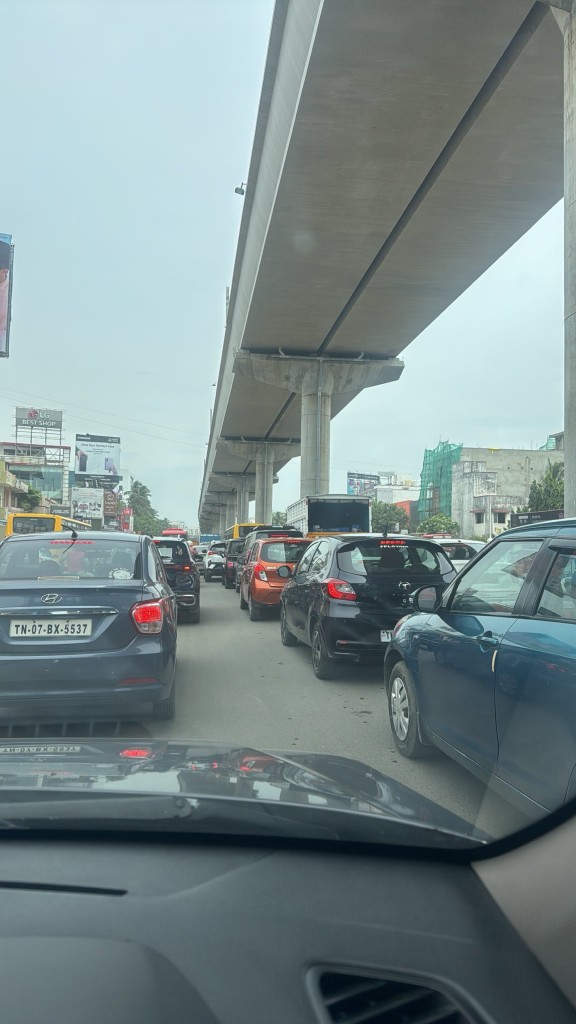
Old Mahabalipuram Road has grown into one of Chennai’s largest concentrations of apartment communities, technology campuses, educational institutions, hospitals, hotels, restaurants, hostels, commercial complexes and mixed-use developments.
That growth has also created a major solid-waste challenge. Thousands of people work, study, live, eat and travel through the OMR corridor every day. Large campuses and residential communities generate food waste, packaging, paper, plastic, sanitary waste, garden waste and other discarded materials in significant quantities.
Under the Solid Waste Management Rules, 2026, large establishments cannot treat waste management merely as a housekeeping function or assume that their responsibility ends when a contractor removes the waste from the premises.
The new Rules came into force on 1 April 2026, replacing the Solid Waste Management Rules, 2016. They require four-stream segregation and introduce clearer responsibilities for Bulk Waste Generators, including responsibility for environmentally sound collection, transportation and processing.
The real question is no longer “Do we have enough waste bins?” — it is whether you can demonstrate where waste is generated, how it is segregated, who collects it, where it goes, how it is processed, and what records prove the system works.
Why OMR needs to pay particular attention
The OMR corridor contains many of the establishment types most likely to fall within the Bulk Waste Generator framework:
- large apartment communities and gated residential campuses
- IT and business parks; corporate offices
- colleges, universities, schools, hostels and paying-guest facilities
- hospitals and diagnostic centres
- hotels, serviced apartments, restaurants and food courts
- shopping complexes, malls, event venues and institutional campuses
Poor segregation can result in mixed waste entering municipal vehicles, recyclables becoming contaminated, food waste creating odour and pest problems, and sanitation workers being forced to handle sanitary or hazardous materials manually. When large establishments manage waste correctly, the wider community benefits through cleaner streets, lower pressure on collection systems, safer working conditions and reduced waste movement towards disposal sites.
First question: Does your establishment qualify as a Bulk Waste Generator?
Under the 2026 Rules, an organisation may be classified as a Bulk Waste Generator when it meets one or more prescribed thresholds:
A large apartment complex or institutional campus could fall within the framework because of built-up area or water consumption even when it has never accurately weighed its daily waste.
- total floor area
- average daily water consumption
- average daily waste generation
- number of residents, employees, students, patients, beds or visitors
- whether multiple buildings function as a single campus
- whether canteens, hostels and food courts are included in the calculation
Where there is uncertainty, document the assessment instead of assuming the premises are outside the Rules.
The four waste streams
The Solid Waste Management Rules, 2026 require waste to be segregated at source into four streams. This is a major operational change from older systems that often treated sanitary waste as part of the dry-waste stream.
Chennai’s Solid Waste Management Bye-Laws, 2019 were framed under the earlier 2016 national Rules (biodegradable, non-biodegradable and domestic hazardous waste). Organisations should update operational systems for the four-stream requirement rather than continuing with outdated two-bin or three-bin practices.
1. Wet waste
Food leftovers, vegetable and fruit waste, kitchen and canteen waste, biodegradable food-service waste, suitable garden waste.
2. Dry waste
Paper, cardboard, plastic, glass, metal, packaging, cloth and other recyclable or non-recyclable dry materials — kept clean and dry.
3. Sanitary waste
Used sanitary napkins, diapers, incontinence products and similar hygiene waste — controlled handling for worker health and dignity.
4. Special-care waste
Discarded medicines, bulbs, batteries, paint and chemical containers, mercury-containing products and similar controlled items.
Wet waste — readiness questions
- Is wet waste collected separately at every generation point?
- Is it weighed daily?
- Is food waste mixed with plastic covers, foil, tissues or disposable cutlery?
- Can the waste be processed within the premises?
- Is an organic waste converter, composting system or biomethanation unit available — and operating, not merely installed?
- What happens when the equipment breaks down?
- Where are rejects and excess waste sent?
- Are input and output records maintained?
Dry waste — readiness questions
- Are recyclable and non-recyclable dry materials separated?
- Is storage protected from rain?
- Is the collector or recycler authorised for the waste accepted?
- Does the organisation know the final destination?
- Are weight records, receipts and processing acknowledgements retained?
- Does the vendor mix all materials after collection?
- Are expired vendor documents being used?
Selling material to a scrap dealer does not automatically prove environmentally sound recycling. Verify where material goes and retain evidence of handover.
Sanitary waste — readiness questions
- Is sanitary waste securely wrapped?
- Are dedicated bins provided in washrooms and relevant areas?
- Is it kept separate during internal collection?
- Are workers trained not to open or sort these bags manually?
- Is there a defined collection route and protective equipment?
- Is the final handover documented?
Sanitary waste should not be hidden inside general dry-waste bags.
Special-care waste — readiness questions
- Has the organisation identified all such items?
- Is temporary storage secure?
- Is broken glass or a damaged bulb handled through an incident procedure?
- Are batteries and chemical containers mixed with ordinary recyclables?
- Is an authorised collection destination identified, with receipts retained?
Waste compliance begins with management responsibility
Many organisations leave waste management entirely to housekeeping contractors. The work may be outsourced, but organisational responsibility cannot be outsourced.
Every Bulk Waste Generator should formally identify: a senior management sponsor; a nodal waste-management officer; a facility or housekeeping lead; a person responsible for daily weighing; a vendor-document verification officer; a training coordinator; and an escalation authority.
| Responsibility | Assigned to | Frequency |
|---|---|---|
| Registration and regulatory updates | As required | |
| Daily segregation inspection | Daily | |
| Waste weighing and records | Daily | |
| Vendor verification | Monthly or quarterly | |
| Wet-waste plant monitoring | Daily | |
| Worker training | Periodic | |
| Management review | Monthly | |
| Incident escalation | Immediate |
Conduct a real waste audit
Estimating waste from the number of bins or people on site is insufficient. Measure waste for at least seven representative days and record wet, recyclable dry, non-recyclable dry, sanitary, special-care, garden, residual and other separately regulated waste — by source (canteen, kitchen, office floor, hostel, apartment block, ward, classroom, food court, retail, landscape, event space).
| Date | Wet | Dry recyclable | Dry residual | Sanitary | Special care | Total |
|---|---|---|---|---|---|---|
| Day 1 | ||||||
| Day 2 | ||||||
| Day 3 | ||||||
| Day 4 | ||||||
| Day 5 | ||||||
| Day 6 | ||||||
| Day 7 |
Determine daily average, peak day, wet-waste percentage, recyclable recovery potential, residual percentage, weekend/event variation and contamination levels. Without weighing, you cannot size processing equipment or prove waste-reduction measures are working.
Check the physical infrastructure
A compliant system needs more than coloured bins: generation-point bins; clear English and Tamil labels where needed; consistent colours and instructions; sufficient capacity; separate internal collection; controlled central storage; washable flooring; lighting and ventilation; drainage where appropriate; pest and odour controls; rain protection; fire precautions; weighing equipment; restricted access; and worker protective equipment.
The central waste room cannot correct poor segregation that begins inside kitchens, offices, classrooms, flats or washrooms.
Verify every waste contractor
Vendor appointment is a compliance decision, not only a price negotiation. Before engaging a provider, verify legal name, registered address, issuing authority, authorisation number and validity, permitted waste categories, vehicle details, destination facility, processing method, weighment process, subcontractors, receipts/certificates, and procedures for rejected or contaminated loads.
Do not mix separately regulated waste
Biomedical waste, e-waste, batteries, construction and demolition debris, hazardous chemicals, used oil, plastic packaging waste and electronic equipment should not enter the municipal solid-waste stream simply because they arise on the same premises. Keep municipal waste separate from biomedical waste in hospitals; keep electronics and batteries out of ordinary dry waste on IT campuses; keep renovation debris out of household waste in apartments.
Documentation: the part most organisations overlook
Maintain current, organised records: BWG registration; floor-area and water data; waste-audit reports; daily weighment logs; responsibility order and policy; SOPs; training records; facility photographs; equipment and wet-waste I/O logs; maintenance records; vendor authorisations; collection receipts; vehicle/weighbridge records; recycling acknowledgements; complaints and corrective actions; inspection records; management-review minutes. Installation photographs are not a substitute for daily operating records.
Protect housekeeping and sanitation workers
No worker should be expected to open mixed bags for sanitary waste, handle broken glass or bulbs without protection, manually sort chemical containers, lift leaking wet-waste bags, enter unsafe storage rooms, operate equipment without training, or handle waste without required PPE. Training should be practical and in languages workers understand.
A 30-day readiness plan for OMR establishments
Days 1–5: Establish responsibility
- Assess possible BWG status; appoint a nodal officer
- Collect floor-area and water-consumption records
- Identify every waste-generation point; list existing contractors
Days 6–10: Measure the waste
- Seven-day audit; weigh each stream; identify contamination
- Calculate daily averages; list separately regulated waste
Days 11–15: Correct the system
- Introduce four-stream segregation; replace unclear labels
- Improve central storage; procure weighing equipment; issue procedures
Days 16–20: Verify processing routes
- Assess wet-waste capacity; inspect composting/biomethanation
- Verify recycler documents; confirm sanitary and special-care channels
Days 21–25: Train and test
- Train housekeeping; brief residents, employees or students
- Segregation inspection; downtime arrangements; vehicle practices
Days 26–30: Document and review
- Organise records; close urgent gaps; management review
- Approve budgets; assign deadlines; prepare for internal audits
OMR Bulk Waste Generator self-check
Mark each item as Yes, Partly or No.
Governance
- We have assessed whether we qualify as a BWG
- A nodal officer has been appointed
- Management reviews waste performance
- Roles are assigned across departments
- A budget is available for compliance
Measurement
- We weigh waste regularly and record quantities by stream
- We know our daily average and track contamination
- We account for weekend and event variation
Segregation
- We use four-stream segregation with correctly labelled bins
- Waste remains separate during internal collection
- Storage has separate sections; overflow does not lead to remixing
Wet waste
- Quantity known; equipment correctly sized; I/O records maintained
- Odour and leachate controlled; breakdown contingency exists
Vendors
- Documents valid; scope matches waste collected; destinations known
- Receipts and weight records retained; subcontractors disclosed
Worker safety & documentation
- Training and PPE provided; sanitary waste not manually sorted
- Breakage/spill procedures and incident logs exist
- Registration, daily logs, vendor and training records current
- Corrective actions are tracked
Interpreting the result: Mostly Yes — verify legal documentation, vendor validity and continuous operation. Several Partly — operational and documentary gaps remain. Several No — senior management intervention is required. This is a readiness check, not a statutory compliance certificate.
Consult with the right SWM 2026 Expert to plan and execute your Waste Management Setup
Need help turning this checklist into a working system for your apartment community, IT park, hospital, school, hotel or commercial campus on OMR? Message an independent SWM 2026 expert on WhatsApp to plan and execute your waste-management setup.
Why this matters beyond the premises
An IT park, apartment community, hotel, college or hospital does not manage waste only for itself. Its decisions affect housekeeping and municipal sanitation workers, neighbouring communities, recyclers, public bins, collection vehicles, roads and drains, air quality, local water bodies and the city’s disposal infrastructure.
When large establishments mix waste, the wider city absorbs the consequences. When they segregate, measure, process and document waste properly, they reduce that burden.
The Solid Waste Management Rules, 2026 should not be understood only as another compliance obligation. For the OMR community, they are an opportunity to build cleaner campuses, safer workplaces, better residential environments and a more accountable waste-management system.
Know what you generate. Keep it separated. Verify where it goes. Record every stage.
Related on MyOMR: SWM Rules 2026 — apartments & BWG · 15-day BWG registration · SWM 2026 OMR preparation
Editorial note: Civic readiness guidance for OMR readers based on the Solid Waste Management Rules, 2026 framework and Chennai’s earlier local bye-law context. Not legal advice — confirm classification, registration and processing obligations with the latest GCC / CPCB / TNPCB directions for your premises.