Chennai & OMR | Civic compliance | Environment
SWM Rules 2026 come into force with a strict compliance framework—four-stream segregation, bulk generator accountability, and digital traceability.
India has entered a new regulatory phase in waste management with the Solid Waste Management (SWM) Rules, 2026 taking effect from 1 April 2026, replacing the earlier 2016 framework. The new rules are structured as a compliance-driven, enforceable system with defined responsibilities, penalties, and monitoring—not an advisory checklist.
Waste management is no longer municipal responsibility alone — it is generator accountability.— Core shift under the new framework
Four-stream waste segregation is mandatory at source
At the centre of the rules is a mandatory four-bin segregation system for households, apartments, and institutions. Waste must be separated into:
Wet (organic)
Kitchen and food waste for composting or bio-processing.
Dry (recyclables)
Paper, plastics, metal, glass—clean and sorted for recycling chains.
Sanitary waste
Hygiene products in designated bags; kept out of wet and dry streams.
Special care waste
Hazardous or special-handling items (e.g. certain chemicals, bulbs)—as per local schedules.
This tightens the older two-stream habit. Failure to segregate is treated as a compliance breach, not merely poor practice.
Apartment societies classified as bulk waste generators
A structural change for gated communities: under the 2026 framework, Bulk Waste Generators (BWG) explicitly include:
- Residential societies and apartment associations
- Large-footprint or high water-use campuses
- Sites generating about 100 kg or more of waste per day (thresholds apply as notified)
BWGs are primary accountable entities—not passive contributors who only hand mixed bags to the conservancy.
On-site processing becomes mandatory for many apartments
Where a society is classified as a BWG, expectations include:
- Process wet waste on the premises using composting or biomethanation, where feasible
- Or obtain an Extended Bulk Waste Generator Responsibility (EBWGR) pathway if on-site treatment is genuinely not feasible—still with documented, authorised downstream arrangements
Generate locally → Process locally.— Decentralised waste management
Enforcement: from policy to notices on the ground
Cities have already begun moving from slides to street-level action: notices to housing societies for non-segregation ahead of the April rollout, identification of non-compliant BWGs, and closer monitoring. That signal matters for OMR clusters where apartment density and commercial kitchens are high.
Polluter pays: fines and environmental compensation
The rules embed Polluter Pays more sharply—authorities can levy environmental compensation, fines for non-segregation, penalties for illegal dumping or burning, and action for false reporting or non-registration. The intent is scalable financial enforcement, not symbolic warnings.
Digital monitoring and mandatory reporting
A centralised direction is visible: registration of generators, digital tracking of quantities and destinations, periodic reporting, and audit trails. The operational shift is clear: from manual observation to verifiable digital compliance.
Landfills restricted to true residual waste
Landfill is framed for non-recyclable, non-recoverable, inert residue after maximum diversion to recycling, composting, and energy recovery—pushing a circular-economy posture and reducing long-haul dumping pressure on sites that already strain cities like Chennai.
Ground reality: workshops, gaps, and infrastructure pressure
As rollout begins, municipalities and pollution boards are running training workshops for enforcement teams. Resident awareness still lags in many towers. Apartments flag space, odour, and capex constraints for on-site units. Media coverage—including outlets such as the Times of India on state-level workshops and corporation guidelines around the April timeline—reflects active preparation rather than a quiet rule change.
What apartment associations must operationalise
- Enforce four-stream segregation at every floor and gate—no mixing at collection points.
- On-site wet waste treatment or a compliant EBWGR route with vetted vendors.
- Authorised recyclers only for dry streams; keep manifests or digital receipts where required.
- Logs and periodic returns—weights, destinations, incidents—so the society can answer audits.
- Budget for compliance—user charges, maintenance of infrastructure, and penalty risk if the chain breaks.
Compliance framework at a glance
| Layer | Requirement |
|---|---|
| Source | Four-bin segregation |
| Processing | On-site treatment or certified alternative |
| Chain | Authorised recyclers and transporters |
| Monitoring | Digital tracking and registration |
| Reporting | Periodic submissions and records |
| Enforcement | Polluter Pays penalties and compensation |
What residents must do every day
- Segregate into four streams at home—daily.
- Do not hide sanitary or special waste inside wet bags.
- Follow association instructions on timing, bags, and chute rules.
- Participate in composting or dry-waste drives when the society runs them.
When residents default, liability often consolidates at the association level—so peer discipline is also self-defence.
Read: from disposal culture to responsibility
The rules reinforce a broader urban shift: from “the corporation will handle it” to “we must segregate, process, report, and comply.” For OMR—high-rise corridors with IT parks, malls, and dense apartment stacks—the cost of delay is higher fines, stopped collections, or reputational hits for societies that miss the bar.
Segregate → Process → Report → Comply.— Practical mantra for 2026
Stay informed on OMR civic and environment stories—share this piece with your association office-bearers.
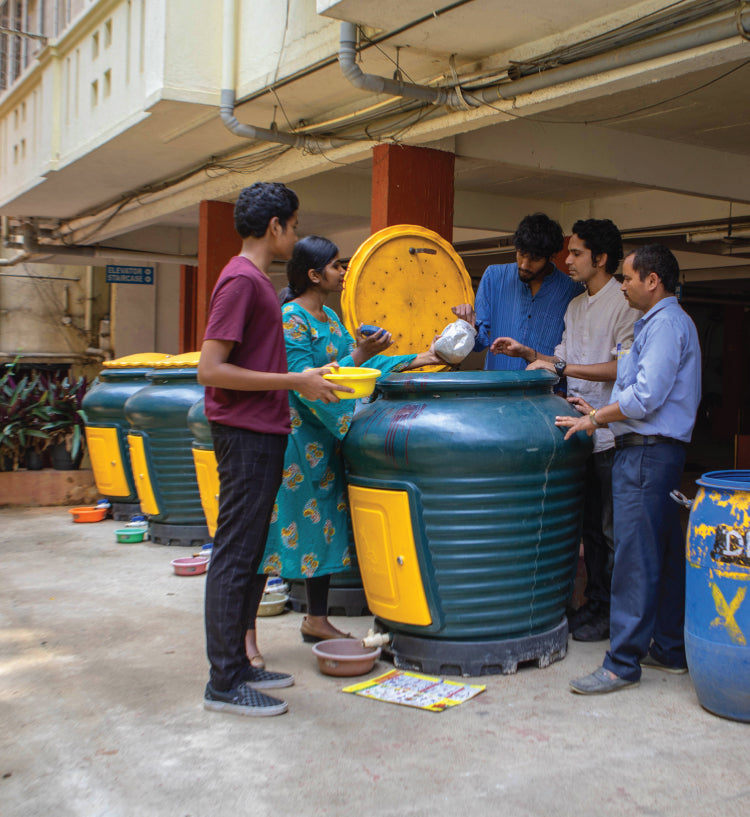
Image: Community composting banner (Daily Dump). Published: 3 April 2026. MyOMR summarises public-interest compliance themes for OMR readers; verify final notifications and corporation circulars for your ward.