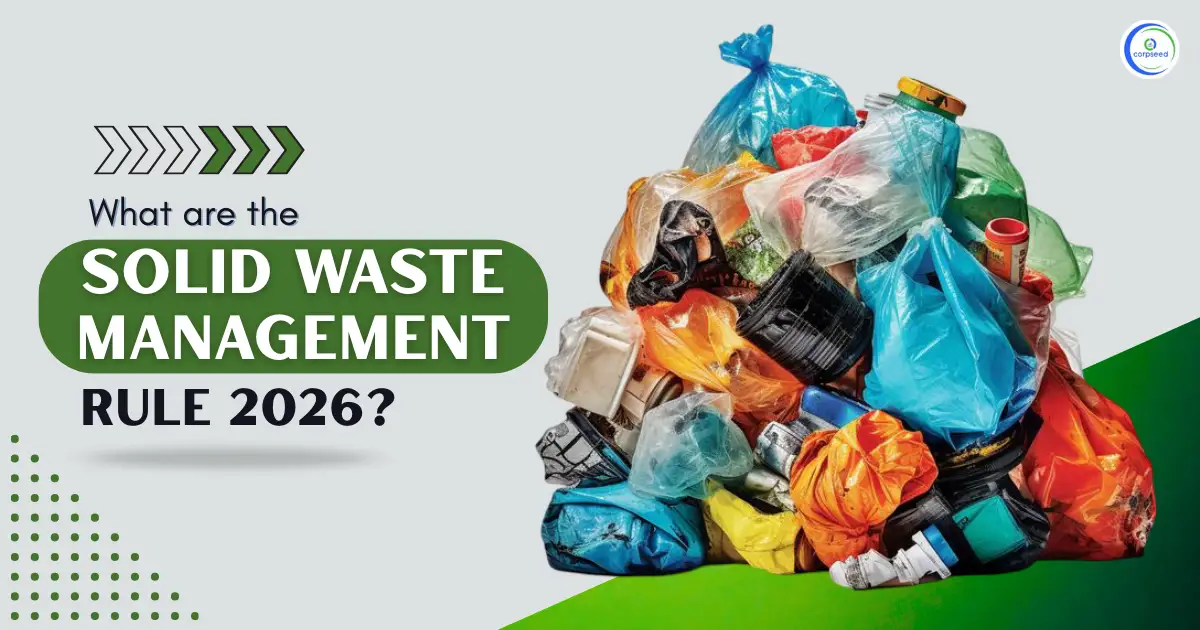
Solid Waste Management Rules 2026: A Governance Inflection Point
For corridors like OMR, this is not a distant policy change. Source segregation, bulk generator accountability, digital monitoring, landfill minimisation — preparation is cheaper than reaction.
OMR News, March 2, 2025
India's waste governance framework has been evolving for a decade. The foundation remains the Solid Waste Management Rules, 2016, notified by the Ministry of Environment, Forest and Climate Change under the Environment (Protection) Act, 1986. Since 2016, multiple amendments and parallel waste streams (Plastic Waste, E-Waste, Bio-Medical Waste, C&D Waste) have progressively tightened compliance, accountability, and traceability.
The recently circulating summary of "Solid Waste Management Rules, 2026" suggests a structural deepening of that framework rather than a cosmetic update. Whether draft, advisory, or pre-notification guidance, its direction is consistent with global urban waste reforms.
The Historical Arc: From Collection to Accountability
Phase 1: Collection-Centric Model (Pre-2016)
Urban waste systems were municipality-driven and landfill-oriented. Segregation was encouraged but weakly enforced. Waste was treated as a downstream problem.
Phase 2: Segregation & Decentralisation (2016 Onward)
The 2016 Rules introduced: mandatory source segregation (wet, dry, domestic hazardous), decentralised composting, recognition of bulk waste generators, extended producer responsibility (EPR) for plastics. Waste responsibility began moving upstream.
Phase 3: Traceability & Polluter Pays (Emerging Direction)
The 2026 structure signals: 4-stream segregation standardisation, quantified thresholds for bulk generators, mandatory on-site wet waste processing, digital reporting portals, landfill restricted to inert residue, polluter pays enforcement.
What the 4-Stream Segregation Represents
The move to four clearly demarcated streams:
- Wet Waste — food, kitchen organics
- Dry Waste — plastic, paper, metal
- Sanitary Waste — diapers, pads
- Special Waste — bulbs, paint, medicines
When sanitary or hazardous fractions enter the wet stream, compost quality degrades, worker safety declines, and recycling economics collapse. A four-stream model protects downstream value chains. For high-density urban zones like OMR — with IT campuses, food courts, hostels, and gated communities — contamination control directly affects waste economics.
Bulk Waste Generator Thresholds: Why They Matter
The proposed criteria (e.g., ≥20,000 sq.m area, ≥100 kg/day waste, high water usage) indicate a measurable definition of bulk generators. In OMR, this category includes:
- IT parks (ELCOT, SIPCOT clusters)
- Large residential communities
- Malls and multiplexes
- Educational campuses
- Corporate cafeterias
This transfers operational responsibility from municipality to generator. The municipality shifts from primary processor to regulator.
Extended Bulk Waste Generator Responsibility (EBWGR): If formalised, EBWGR signals three obligations: process wet waste on-site, obtain certification, ensure safe downstream disposal. For OMR stakeholders, space allocation for composting or bio-methanation units becomes a design consideration. Waste management becomes a boardroom metric, not housekeeping.
Digital SWM Portal: Governance Through Data
A digital tracking system implies: waste quantity logging, processing verification, compliance audit trails, potential integration with property tax or trade license renewals. For OMR's commercial ecosystem, waste data may become part of environmental clearance renewal. Non-compliance could trigger financial penalties. Digital governance reduces discretion and increases accountability.
Limited Landfilling: A Strategic Imperative
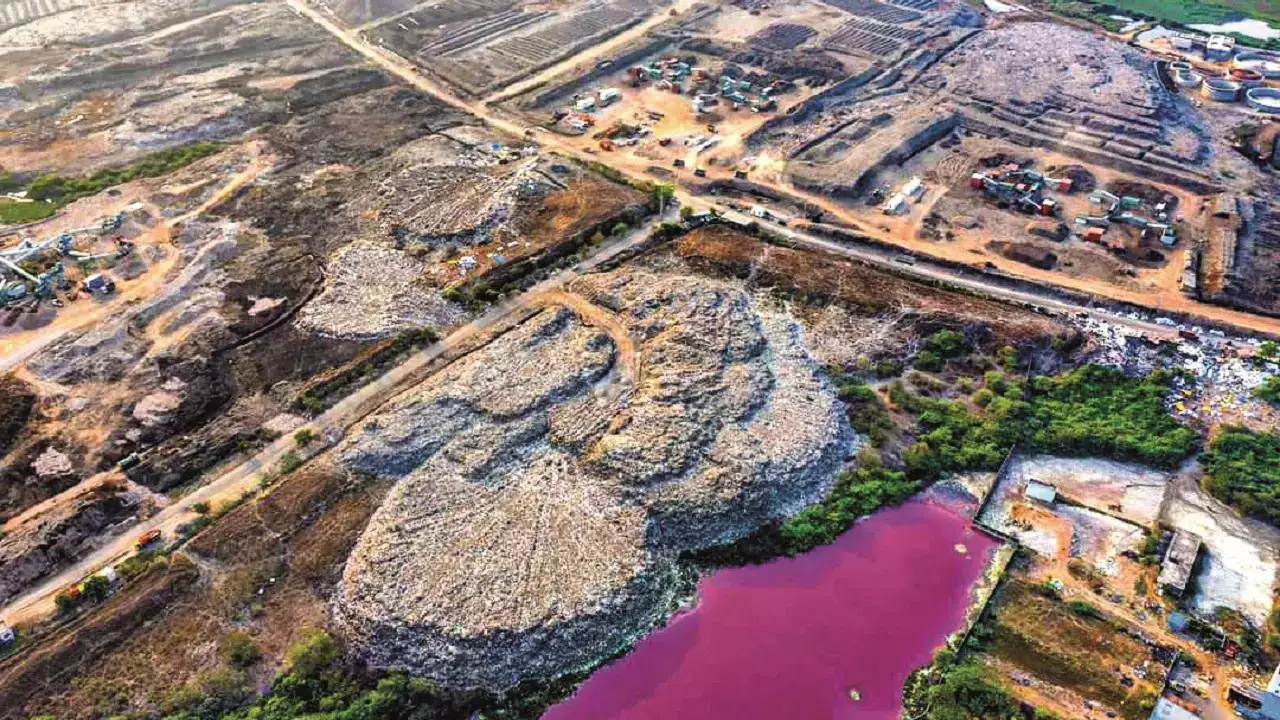
The restriction of landfills to inert and non-recyclable residue aligns with global climate goals. Chennai already faces landfill stress (Perungudi, Kodungaiyur). For OMR, decentralised waste treatment reduces haulage burden. Lower transport distances reduce methane and diesel emissions. Waste is urban infrastructure, not peripheral service.
End-User Implications
For Residents
Mandatory segregation discipline, possible differential user charges, increased scrutiny of apartment associations.
For Apartment Associations
On-site composting feasibility study, vendor selection for dry waste aggregation, sanitary and hazardous waste tie-ups, digital compliance documentation.
For IT Companies
ESG reporting alignment, facility retrofitting, waste stream mapping, employee behavioural training.
For Facility Management Firms
Process redesign, waste audit reporting capabilities, integration of environmental monitoring systems.
OMR-Specific Structural Realities
OMR is Chennai's IT spine, a high-density mixed-use corridor, rapidly urbanising with vertical housing. It is infrastructure-sensitive (marshlands, floodplains, coastal regulation influence). Waste mismanagement compounds: flood risk, drain choking, coastal contamination, vector-borne disease risk. Segregation reform in OMR is environmental risk mitigation, not just civic housekeeping.
Stakeholder Checklist for OMR
- Conduct Waste Quantification Audit — daily generation, stream composition, seasonal variation
- Map Infrastructure Capacity — space for composting, electricity and water, odour and leachate management
- Vendor Ecosystem Mapping — TNPCB-authorised recyclers, hazardous waste handlers, sanitary waste disposal partners
- Digital Preparedness — data logging systems, monthly reporting format, compliance documentation repository
- Legal Monitoring — MoEFCC Gazette notifications, TNPCB circulars, GCC implementation orders. Do not act on viral graphics. Act on notified law.
Risk if Ignored: Financial penalties, license suspension, public naming in digital compliance dashboards, ESG reputation damage, increased waste service charges. Urban compliance is moving from reactive to pre-emptive.
Strategic View
The direction is clear even if formal notification is pending: source accountability, data transparency, landfill minimisation, polluter pays enforcement. OMR, as a technology corridor, will likely see early enforcement. Corridors that manage waste intelligently attract higher-grade tenants, institutional investors, ESG-conscious corporates. The coming decade will separate compliant urban ecosystems from chaotic ones. Waste reform is one of the early indicators.
OMR stakeholders should not wait for enforcement notices.
Preparation is cheaper than reaction. Waste management is no longer a sanitation department issue. It is an environmental, economic, and governance issue. For OMR, it is also a competitive positioning issue.
If you have information about waste management or environmental developments affecting the OMR community, share it with us. MyOMR welcomes collective journalism involving all stakeholders of the OMR corridor.