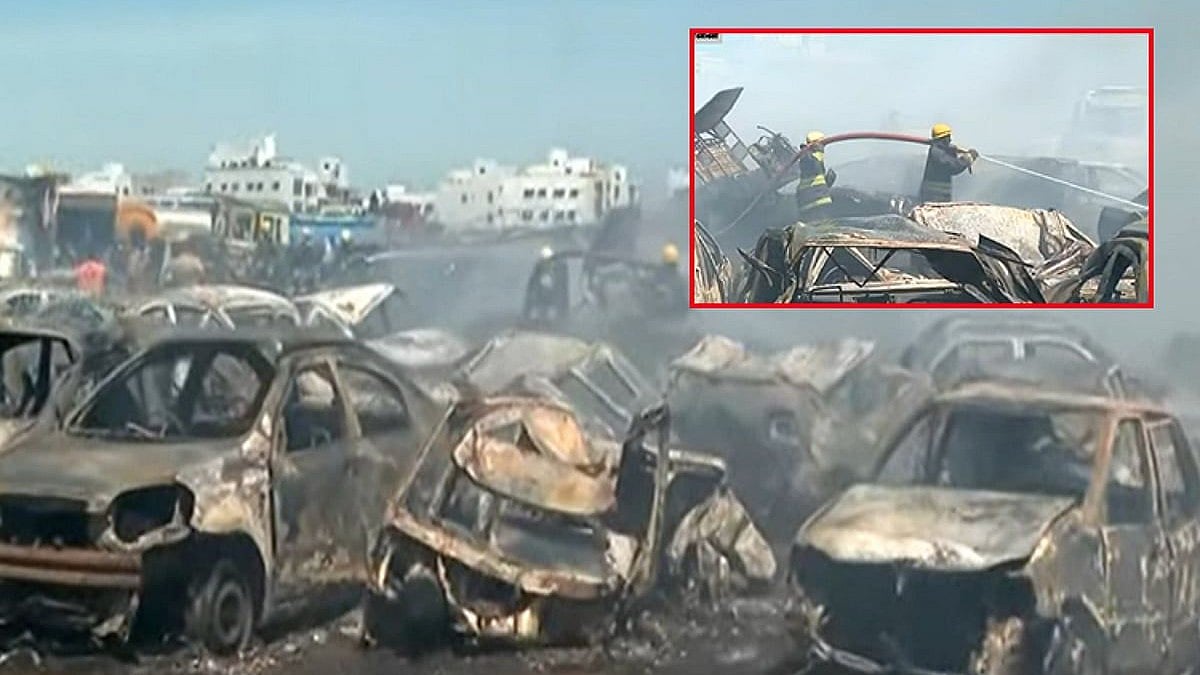
A major fire at the Pallikaranai dumpyard sent thick black smoke across South Chennai on Thursday, 4 June 2026, damaging more than 100 seized vehicles and renewing urgent questions about fire safety near the ecologically sensitive Pallikaranai marshland.
A major fire broke out at the Pallikaranai dumpyard in Chennai on Thursday, June 4, 2026, sending thick black smoke across nearby areas including Pallikaranai, Velachery and surrounding parts of South Chennai. The blaze reportedly spread to an adjoining vehicle holding area, where more than 100 seized vehicles were gutted or damaged. Fire and Rescue Services personnel rushed to the spot with multiple fire tenders, while water tankers were also deployed to support firefighting operations.
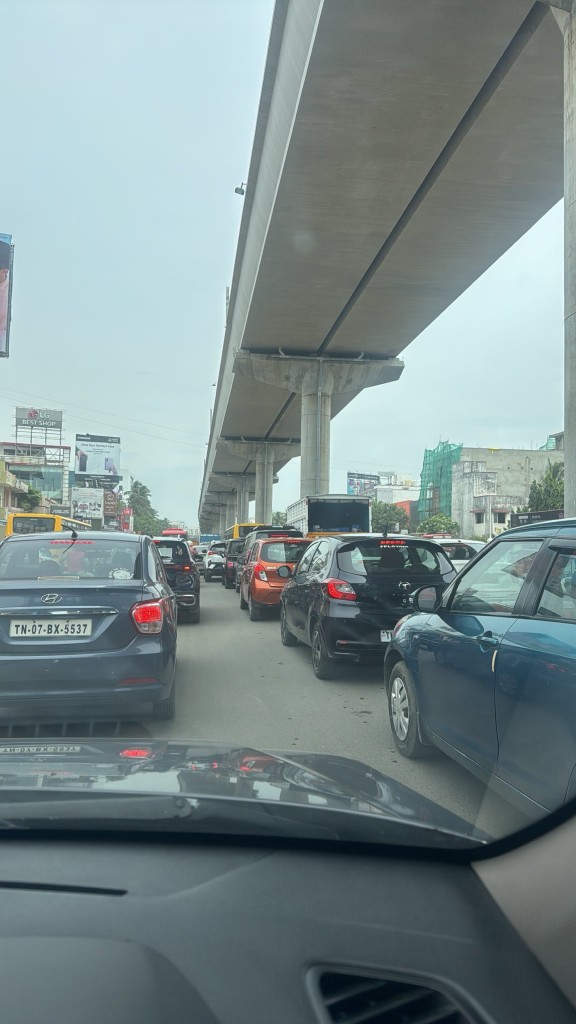
According to reports, dense smoke reduced visibility on nearby roads and caused discomfort among residents and commuters. The Medavakkam–Velachery stretch was also affected as motorists had to move through smoke-filled conditions. Officials said the fire was brought under control, while operations continued to extinguish remaining hotspots and prevent further spread.
The exact cause of the fire is yet to be officially confirmed. However, the incident has once again exposed the risk of allowing combustible waste, abandoned materials and seized vehicles to remain concentrated in poorly protected urban spaces. Dumpyards, vehicle holding areas, warehouses and storage yards are not passive spaces. Without zoning, monitoring, firebreaks and emergency access, they can quickly become ignition points for large-scale urban hazards.
Why Pallikaranai Fire Is More Than a Local Incident
The Pallikaranai dumpyard is located close to the ecologically sensitive Pallikaranai marshland, one of Chennai’s most important wetland ecosystems. The marsh drains a large part of South Chennai and is connected to multiple wetlands and drainage outlets, making it important for flood buffering, groundwater recharge and urban ecological balance. See why protecting OMR wetlands is every resident’s responsibility.
When a fire breaks out near such a wetland system, the impact is not limited to smoke in the air. Burning waste, plastics, rubber, vehicle parts, fuel residues, oils and other mixed materials can release toxic particles that settle on water bodies, vegetation and soil. This can affect birds, reptiles, fish, amphibians, insects and plant life that depend on the marsh. Smoke and heat can disturb nesting, feeding and movement patterns of wetland birds, while contaminated ash and runoff can enter water channels during rain. In a biodiversity-rich marshland, repeated fire events slowly weaken the ecosystem even when the visible flames are controlled.
Link With Recent OMR Warehouse Fire
This incident should also be read along with the recent warehouse fire reported on OMR Road and already covered by MyOMR. Both incidents point to the same civic failure: fire safety is still being treated as a formality instead of an active operating discipline.
Read our earlier report on the recent OMR warehouse fire at Tech Mahindra’s Karapakkam ELCOT SEZ campus.
In the OMR warehouse fire case, the risk was linked to storage, commercial activity and emergency preparedness. In Pallikaranai, the risk comes from waste accumulation, seized vehicles, combustible material and poor site segregation. The locations are different, but the lesson is the same. Any site that stores material without fire-risk planning can become a public hazard.
Fire Safety Cannot Be an Afterthought
Chennai’s growth along OMR, Pallikaranai, Velachery, Medavakkam and Perungudi has brought dense residential, commercial, transport and institutional activity into the same geography. In such areas, fire safety cannot depend only on the arrival of fire tenders after smoke becomes visible.
Every dumpyard, warehouse, vehicle yard, scrap storage area and commercial facility must have basic fire prevention systems. This includes proper material segregation, clear access roads for fire vehicles, water availability, hydrant points, thermal or smoke monitoring, CCTV surveillance, trained staff, safe electrical systems, no uncontrolled dumping, no blocked exits and periodic fire audits.
The bigger issue is lack of civic sensibility. A site may look unused, temporary or informal, but once combustible material is stored there, it becomes a risk zone. Authorities, businesses and local operators must stop treating such spaces casually. Fire safety is not only a compliance certificate. It is a public responsibility.
What Authorities Should Review Immediately
The Pallikaranai fire must trigger a serious safety review of all high-risk storage and waste locations in South Chennai. Vehicle holding areas, municipal yards, dumpyards, scrap yards, warehouses and temporary storage spaces need mapped fire-risk categories.
Sites close to wetlands, schools, hospitals, residential areas and major roads should receive higher scrutiny. Emergency access routes must be kept open. Seized vehicles should not remain indefinitely in unsafe clusters. Combustible waste must be separated and cleared at regular intervals. Fire-risk audits should be made routine, not reactive.
Incident: Major dumpyard fire with adjoining vehicle yard damage
Location: Pallikaranai dumpyard, South Chennai
Date: Thursday, 4 June 2026
Impact: Thick smoke across Pallikaranai, Velachery, Medavakkam–Velachery stretch; 100+ seized vehicles damaged
Response: Multiple fire tenders and water tankers deployed; fire brought under control; hotspot dousing ongoing
Ecology: Site adjacent to Pallikaranai marshland (Ramsar wetland)
Cause: Not officially confirmed
Public Health Concern
Residents exposed to thick smoke from dumpyard fires may face breathing discomfort, eye irritation, throat irritation and other short-term health effects. For children, senior citizens, asthma patients and people with respiratory conditions, such smoke exposure can be more serious. Authorities must issue timely local advisories during such incidents, especially in dense residential zones.
If you live near Pallikaranai, Velachery or Medavakkam and experience persistent breathing difficulty, chest tightness or severe irritation after smoke exposure, seek medical advice. Limit outdoor activity when smoke is visible and follow official advisories only.
Conclusion
The Pallikaranai dumpyard fire is not just another Chennai fire incident. It is a warning from the city’s southern edge, where urban waste, traffic, residential density, commercial growth and ecological sensitivity overlap.
After the recent OMR warehouse fire and now the Pallikaranai dumpyard blaze, South Chennai needs a stronger fire-safety culture. The city cannot wait for every incident to become a smoke-filled reminder. Prevention, monitoring and responsible site management must begin before the next fire.