Wetland Watch / Chennai
Pallikaranai Is Not Empty Land
Chennai must treat the marsh as flood infrastructure.
Pallikaranai • Perungudi • OMR • South Chennai
Hero image source (Wikimedia Commons)
Ramsar Site No. 2481 • designated 08-04-2022Chennai’s flamingos are only the warning signal. The real issue is whether the city is damaging one of its most important natural flood buffers.
When people speak about Pallikaranai Marsh, the discussion often begins with birds, flamingos, photographers and weekend nature watchers. But that is only the visible layer of the story.
The deeper question is this: is Chennai protecting one of its last natural flood-control systems, or is it slowly converting it into a construction margin?
Pallikaranai is not a decorative wetland. It is not vacant land waiting for roads, buildings, railway structures or temporary construction yards. It is a living drainage basin that receives water from a large part of South Chennai and plays a direct role in how the city handles rain, stormwater and flooding.
For residents of Velachery, Madipakkam, Pallikaranai, Perungudi, Thoraipakkam, Sholinganallur and the wider OMR belt, this is not merely an environmental story. It is a civic safety story. For the wider legal and resident-responsibility frame, see Why Pallikaranai and OMR’s Wetlands Are Everyone’s Responsibility.

Why the missing flamingos matter
The reported reduction or movement of flamingos around Pallikaranai should not be dismissed as a birdwatching concern. Birds respond quickly to changes in water depth, food availability, disturbance, noise, pollution and habitat safety.
When migratory birds avoid a wetland, it often indicates deeper stress in the ecosystem. Construction dust, piling activity, night-time lighting, debris dumping, water-flow obstruction, sewage inflow and human disturbance can all alter the conditions that make a marsh usable for birds.
But the same disturbance that affects birds can also affect the city. If water channels are blocked, if marsh edges are filled, if drainage paths are altered, if the land is compacted or raised, the marsh loses storage capacity. During heavy rain, that loss does not remain inside the marsh. It shows up as road flooding, apartment inundation, traffic collapse, sewage overflow and public health risk.
The flamingos are not the main victims alone. They are early messengers.
-
Birds depend on shallow feeding zones. Depth changes can remove usable habitat quickly.
-
Pollution affects fish, insects and aquatic organisms that migratory birds rely on.
-
Noise, night lighting and movement alter resting and feeding zones.
-
Sewage and industrial runoff change water quality and food availability.
-
When birds leave, the wetland is already under hydrological or ecological stress.
Water depth change → Food loss → Noise/light disturbance → Polluted inflow → Habitat avoidance
Pallikaranai is Chennai’s unpaid flood engineer
Modern cities spend thousands of crores on drains, pumps, roads, bridges and flood-control projects. Yet a natural wetland like Pallikaranai performs a part of this work silently. It holds water. It slows water. It receives runoff. It connects with other wetlands. It supports groundwater and biodiversity. It reduces the shock of intense rain when its natural flows are respected.
The problem begins when government agencies, private developers and infrastructure contractors see wetlands only through land parcels and project boundaries. A wetland cannot be protected by saving only the visible waterbody. Its survival depends on its feeder channels, overflow areas, catchment connections, low-lying edges and surrounding drainage paths.
That is why the “zone of influence” around Pallikaranai must be treated seriously. The real boundary of a wetland is not always where the water is visible on a dry day. The real boundary is where water moves during rain, where the land stores excess flow, and where the marsh depends on surrounding hydrology to remain alive.

Perungudi dumpyard: a repeated burden on the marsh
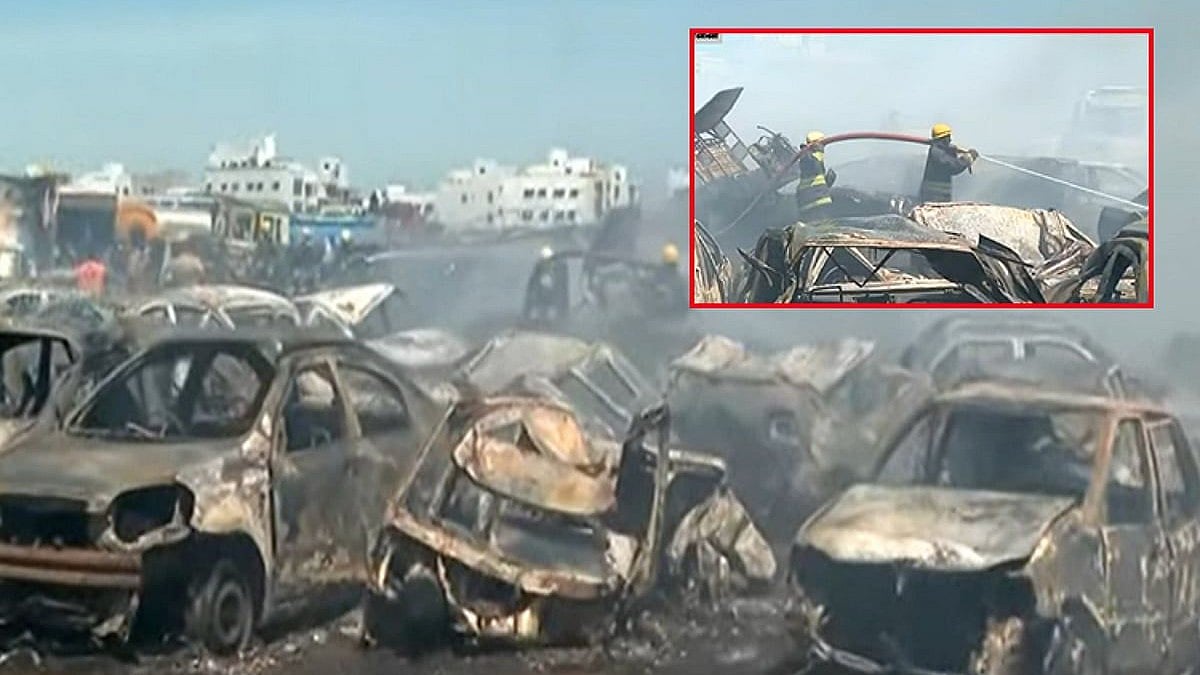
Recent dumpyard fire coverage. See also The Quint, Times of India.
The Perungudi dumpyard adds another layer of stress to Pallikaranai. This is not a new allegation or a vague environmental fear. Reported news and civic records have repeatedly linked the dumpyard with toxic smoke, landfill fires, leachate discharge, groundwater concerns and direct ecological pressure on the marsh.
The News Minute reported in April 2022 that thick toxic fumes from a Perungudi landfill fire spread over a 6 km radius, affecting nearby residential areas including Velachery, Pallikaranai and Perungudi. Times of India also reported earlier TNPCB-monitored pollution concerns around Perungudi and Pallikaranai, including high respirable suspended particulate matter levels after dumpyard fire incidents. More recent reporting in 2025 again recorded residents’ complaints of allergies, respiratory distress and groundwater contamination concerns linked to recurring Perungudi dumpyard fires.
The most serious concern is leachate. Decomposing mixed waste produces contaminated liquid that can carry organic pollutants, heavy metals and toxic residues into soil, water channels and groundwater if not properly collected and treated. Madras Musings, citing an April 2025 report by The Hindu, recorded that untreated leachate from the Perungudi dumpyard was reported to be discharged directly into the Pallikaranai marshland, with expert concerns that the waste may have affected the colour and odour of groundwater.
Mixed waste decomposition → Leachate → soil / channels / marsh / groundwater concern
These reports show that the dumpyard is not merely a waste-management site; it has become a repeated public-health and wetland-risk source. Chennai cannot discuss metro works, construction approvals or marsh protection without also treating the Perungudi dumpyard as a central environmental burden on Pallikaranai. Read our report on the June 2026 Pallikaranai dumpyard fire.
Metro development cannot ignore wetland responsibility
Chennai needs better public transport. Metro expansion is important for reducing road congestion, improving mobility and supporting a growing city. CMRL Phase II is planned as 118.9 km with 128 stations at an estimated cost of ₹63,246 crore.
But public transport infrastructure cannot become an excuse for ecological shortcuts. If metro-related works pass near sensitive wetland systems, the responsibility becomes higher, not lower. Such projects must maintain strict controls on construction debris, piling impacts, vibration, water flow, stormwater diversion, worker movement, temporary access roads, night lighting, fuel handling and dust.
The question is not whether Chennai should have a metro. The question is whether Chennai can build a metro without weakening the very floodplain that protects the city. Good infrastructure should reduce urban risk. It should not transfer risk from project cost sheets to residents during monsoon.
CMRL Phase II map (PDF)Development with safeguards
Irresponsible approach
- Project boundary only
- Debris unmanaged
- Flow ignored
- Temporary damage normalized
Responsible development
- Hydrology mapped
- Channels protected
- Waste controlled
- Post-work verification done
Compliance must move from file approval to field verification
Companies and public agencies working near Pallikaranai must follow wetland protection, environmental clearance, stormwater management, construction waste, pollution control and biodiversity safeguards in real terms. The compliance requirement is simple: do not treat wetland clearance as a file approval. Treat it as a continuing duty.
Officials must inspect the flow, not just the fence
One of the biggest failures in urban wetland governance is boundary-based inspection. Officials often check whether a structure falls inside or outside a marked boundary. But Pallikaranai requires a hydrology-based inspection.
Fence-based inspection
Looks only at whether work falls inside or outside a marked wetland boundary.
Flow-based inspection
Checks inlet, outlet, slope, culvert, channel, overflow and satellite wetland connections.
The better question is: “Will this work affect the marsh’s water, storage, drainage, biodiversity or flood-control function?”
50 stormwater inlets discharge directly into Pallikaranai Marsh Reserve ForestAuthorities must inspect feeder channels, stormwater inlets, satellite wetlands, low-lying buffer areas, road culverts, outfalls and temporary construction diversions. A construction site may not touch standing water and still harm the wetland if it changes slope, fills a depression or diverts runoff.
The cost of ignoring Pallikaranai will be paid by residents
When wetlands are damaged, the cost is not paid immediately by the contractor or approving officer. It is paid later by residents.
Chennai has already seen how dangerous it is to underestimate floodplains, lakes, marshes and drainage corridors. Pallikaranai is one of the last major reminders that the city’s water system cannot be endlessly compressed.
What Chennai must verify now
The government must publish clear, accessible maps of Pallikaranai’s boundary, zone of influence, drainage channels and sensitive areas. CMDA, CMRL, TNPCB, the Wetland Authority, Forest Department, Water Resources Department, Greater Chennai Corporation and district administration must work from one unified wetland-risk map.
| Risk Area | Why It Matters | Public Verification Needed | Likely Agency Stakeholders |
|---|---|---|---|
| Wetland boundary | Prevents ambiguity in approvals and enforcement. | Publish final boundary and survey numbers. | TNSWA, NCSCM, Revenue Dept. |
| Zone of influence | Wetland damage can happen outside visible water areas. | Publish hydrology-based influence map. | TNSWA, WRD, CMDA. |
| Stormwater inlets | Blocked inlets can increase flooding in surrounding areas. | Inspect inlet condition before monsoon. | GCC, WRD, District Administration. |
| Metro works | Construction near sensitive hydrology needs stricter safeguards. | Publish debris, slurry, drainage and restoration controls. | CMRL, contractors, TNPCB. |
| Perungudi dumpyard | Smoke and leachate add direct stress to residents and the marsh. | Publish fire-prevention and leachate-treatment status. | GCC, TNPCB, Health Dept. |
| New construction | Land filling and slope changes can disturb marsh flow. | Check approvals against wetland-risk maps. | CMDA, SEIAA, TNSWA. |
All ongoing and proposed construction activity near the marsh must be checked against hydrology, not merely land ownership. Private patta land cannot be treated as ecologically harmless if it falls within a wetland-dependent drainage system. Contractors must be held responsible for temporary damage too. A temporary work road, temporary dumping area or temporary water diversion can still create permanent ecological damage.
A wetland is not protected by saving only the water. It is protected by saving the flow.