Civic Issues · Public transport · OMR corridor
Daily bus users at Kelambakkam call for cleanliness, lighting, safety and dignified waiting space as the locality grows fast along OMR.
A bus depot is not just where buses halt or operate. For students, office-goers, workers, senior citizens, and families along the OMR corridor, it is an everyday public facility. The present condition of the Kelambakkam Bus Depot has raised genuine concern among residents and commuters who depend on it daily.
Kelambakkam, 26 May 2026 — By MyOMR Editorial Team
A growing locality on the IT corridor
Kelambakkam, one of the fast-growing localities along the OMR corridor, continues to see increasing daily movement of students, office-goers, workers, residents, senior citizens, and families who depend on public transport. The area has expanded rapidly in recent years with new residential communities, colleges, hospitals, commercial activity, and rising road traffic.
In this context, the condition of the Kelambakkam Bus Depot has become a visible concern for the people who use it most — the daily commuters.
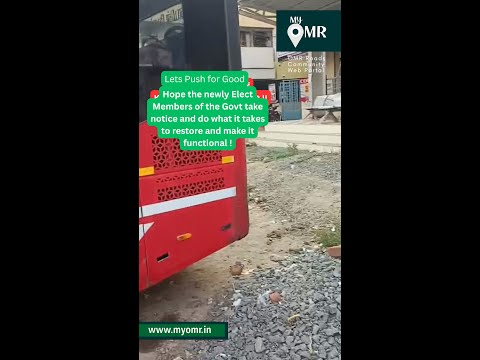
Watch: Ground reality from the depot
Watch on YouTube · third-party footage shared publicly
Why a bus depot is more than a parking yard
A bus depot is an important public facility used by ordinary people every day. It is not just a place where buses are parked, fuelled, or rotated between routes. It is a transit point, a waiting space, a meeting point, and often a first or last interaction with the city for many travellers.
Basic maintenance, cleanliness, safe movement space, proper lighting, waiting areas, waste management, and passenger comfort are essential for such a public transport point. When these facilities are not maintained properly, the impact is felt directly by the people who depend on buses for their daily travel.
Cleanliness
Regular sweeping, garbage clearance, and clean surroundings are basic dignity for daily users.
Lighting
Adequate lighting matters for safety, especially for women and senior citizens travelling early or late.
Waiting space
Shaded seating and shelter make a real difference in Chennai’s heat and monsoon.
Safe movement
Clear pedestrian paths, marked bus bays, and unblocked access reduce daily accidents.
Waste management
Bins, drainage, and routine cleaning prevent the depot from becoming a neighbourhood eyesore.
Passenger info
Route boards, timings, and signages help new users and outstation visitors.
Infrastructure must keep pace with growth
Kelambakkam has grown rapidly with new residential communities, colleges such as Hindustan and SSN nearby, hospital campuses, retail clusters, and commercial activity. Road traffic has multiplied. Public infrastructure in the area needs to keep pace with this growth.
Transport facilities such as bus depots and bus stands must be treated as essential civic spaces, not as neglected background infrastructure. They serve thousands of commuters every single day — people who may not own private vehicles, who depend on the bus for their job, school, or hospital visit.
A test for newly elected representatives
With newly elected representatives now in office at the state and local levels, residents hope that such everyday civic issues will receive timely attention. Good governance is reflected not only in major projects, announcements, and ribbon-cuttings, but also in how basic public facilities are maintained for daily users.
A clean, well-lit, safe bus depot may not make headlines. But for the thousands of people who pass through it every day, it directly shapes their experience of public service.
What residents are asking for
- Immediate inspection by concerned officials — MTC, transport department, local body, and elected representatives.
- Address pending maintenance issues: garbage, broken surfaces, water stagnation, damaged shelters, and lighting gaps.
- Cleanliness drive followed by a regular cleaning and monitoring schedule.
- Safety upgrades — lighting, pedestrian movement, secure waiting zones for women and senior citizens.
- Passenger amenities — seating, drinking water, toilets, and route information boards.
- Long-term upkeep plan with clear ownership: who inspects, who funds, who reports.
Wider impact along OMR
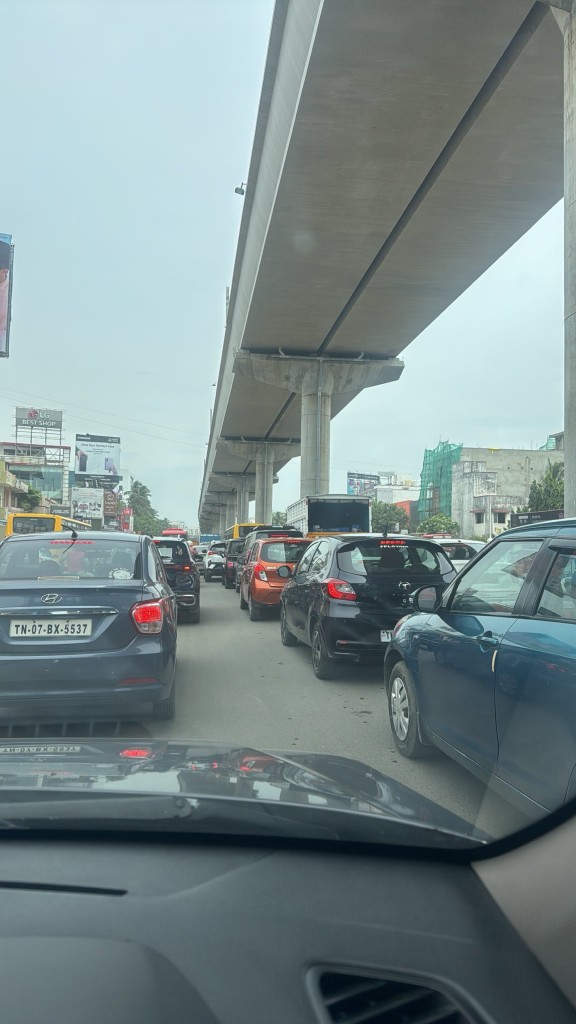
The condition of bus stands and depots is not a Kelambakkam-only problem. Across OMR — from Thoraipakkam, Perungudi, Sholinganallur, Navalur, Siruseri, and Padur to Kelambakkam and Thiruporur — public transport infrastructure is under pressure from rapid growth. Bus services remain the lifeline for a large section of the working population that keeps OMR running.
If the corridor wants to be world-class, its first-mile and last-mile public transport spaces must look and feel maintained, not abandoned.
MyOMR View
Improvements in cleanliness, safety, lighting, passenger access, and regular monitoring can make a meaningful difference to thousands of commuters. It does not require a mega-project — it requires consistent civic ownership.
We urge the concerned authorities to inspect the Kelambakkam Bus Depot, address immediate maintenance issues, and put in place a long-term upkeep schedule with public accountability.
Public transport deserves dignity.
Public spaces deserve regular maintenance.
Growing localities deserve responsible civic attention.
Kelambakkam is expanding. Its public transport infrastructure must also improve with the needs of the people.