Chennai · OMR Civic Watch · July 2026
Greater Chennai Corporation has moved from awareness to enforcement. Bulk waste generators — including large OMR apartments, IT parks, hospitals and hotels — have 15 days to register on GCC and CPCB portals or face penalties.
At a review meeting at Ripon Buildings on 4 July 2026, Greater Chennai Corporation Commissioner Dr G.S. Sameeran directed officials across all 15 zones to tighten implementation of the Solid Waste Management Rules, 2026. Qualifying establishments must register online, keep waste records, and be ready to prove how waste is segregated, processed, transported and disposed of.
The question is no longer “Do we separate wet and dry?” It is: “Can we prove where every stream went?”
registered
- Registered: 1,944
- Pending: 1,259 — nearly four in ten identified premises
June already showed enforcement is live: 120 bulk generators were penalised. Registration alone is not full compliance — segregation, wet-waste processing and authorised handover still matter.
Why this matters on OMR
The OMR corridor — Sholinganallur, Thoraipakkam, Perungudi, Karapakkam, Navalur, Kelambakkam, Padur, Siruseri and nearby stretches — has exactly the mix of premises the rules target: gated towers, IT campuses, food courts, hospitals, schools, hostels, hotels and malls.
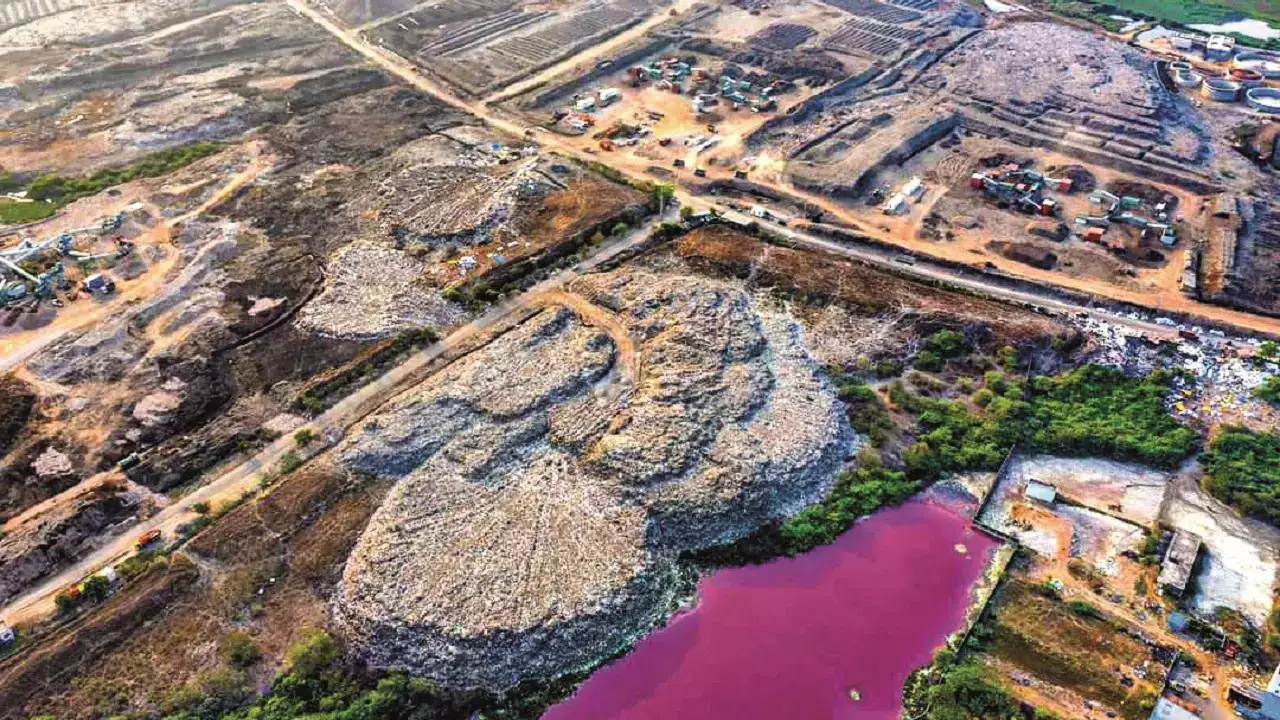
Waste that leaves these compounds does not stay “inside the gate.” Mixed bags end up in roadside bins, stormwater drains, canal edges and the Perungudi–Pallikaranai waste landscape. For a corridor already watching wetland and flood risk, solid-waste compliance is also drainage and public-health infrastructure. See our earlier guide: SWM Rules 2026 for apartment & BWG compliance.
Who counts as a bulk waste generator?
Under the 2026 rules, a premises can qualify if it meets any one of these thresholds:
You do not need all three. A dense OMR apartment with ~200 flats generating ~500 g each can already cross 100 kg/day — even on a modest plot.
Typical OMR premises likely in scope
Residential
- Large gated communities
- Multi-tower associations
- Big hostels & PGs
Work & campus
- IT parks & SEZs
- Corporate offices
- Colleges & schools
Care & hospitality
- Hospitals & clinics
- Hotels & resorts
- Marriage halls
Retail & food
- Malls & multiplexes
- Food courts
- Cloud kitchens
What has changed since April
Chennai has moved from notification and identification into inspection and enforcement. Paper awareness is no longer enough.
Four-stream segregation is the baseline
1. Wet
Food, peels, flowers, compostable organics → composting or biomethanation.
2. Dry
Paper, plastic, metal, glass, packaging → material recovery / recycling.
3. Sanitary
Pads, diapers, hygiene waste — wrapped, labelled, kept separate.
4. Special care
Bulbs, medicines, paint cans, certain batteries → authorised collection.
Mixing streams contaminates compost, endangers workers, and pushes more material toward dumpyards. Bins at the gate are useless if waste is already mixed upstairs.
- Mixed bags
- Roadside GCC bin
- Overflow & animals
- Mixed transport
- Dumpyard
- Four-way segregation
- On-site wet processing
- Authorised dry / sanitary handover
- Records & portal returns
- Only residue for disposal
What bulk generators must do (beyond registration)
- Buy adequate colour-coded bins for four streams — at own cost
- Segregate at source (homes, kitchens, offices, wards, food courts)
- Process wet waste on-site where required (composting / biomethanation)
- Hand dry, sanitary and special-care waste to authorised agencies only
- Keep quantity, vendor, transport and destination records
- Upload generation / processing / disposal data on GCC & CPCB portals
- Stop dumping bulk mixed waste into roadside Corporation bins
Apartment associations & RWAs — act this week
- Check built-up area, water use and a 7-day waste weigh-in (weekdays + weekend).
- Complete GCC + CPCB registration; save acknowledgements.
- Audit household → floor → waste room → vehicle → vendor handover.
- Test the wet-waste plant: capacity vs actual load, downtime, odour, compost use.
- Verify vendor authorisations, weight slips and receiving-facility details.
- Issue multi-language resident instructions for four streams.
- Build a compliance file: registrations, audits, contracts, photos, returns, inspection notes.
IT parks & corporate campuses
Treat waste as facility governance and ESG — not only housekeeping.
- Map waste by cafeteria, floors, pantry, landscaping, events and medical rooms.
- Define landlord vs tenant duties in lease / facility rules (bins, training, returns, penalties).
- Track food waste per meal; prevent waste before processing it.
- Report: kg per employee, % segregated, % composted/recycled, landfill share, vendor compliance.
Hospitals & healthcare
Keep municipal solid waste and biomedical waste strictly separate. Mixing creates health and legal risk.
- Label carts and storage by stream and department.
- Train staff by ward; weigh and document both systems independently.
- Use only authorised vendors for each stream.
Hotels, marriage halls & restaurants
- Estimate waste per event; never send function waste to roadside bins.
- Write segregation and disposal clauses into caterer / decorator contracts.
- Track kitchen waste, surplus food, used cooking oil and packaging.
Schools, colleges & hostels
- Canteens, hostels and labs can push institutions over the 100 kg/day line.
- Student eco-clubs help awareness — they do not replace professional compliance.
- Institution remains responsible for storage, authorised handling and reporting.
What every OMR resident can do at home
- Wet: daily kitchen waste
- Dry: clean paper, plastic, metal, glass
- Sanitary: wrapped pads / diapers
- Special care: bulbs, medicines, batteries in a labelled box until collection
Do not leave bags at gates or drains. Report repeated mixing by staff or collectors to your association.
Why roadside bins still overflow
When a hotel, marriage hall or large apartment dumps hundreds of kilograms into a public bin designed for household routes, the bin fills early. Bags spill onto the road, animals tear them open, leachate enters drains, and neighbours blame collection workers. Digital registration and authorised collection are meant to close that accountability gap — private bulk waste should not be shifted onto the public system unpaid and untracked.
Enforcement without infrastructure will stall
Penalties are necessary for deliberate non-compliance. They cannot replace compartmentalised vehicles, transfer stations, material recovery, composting capacity and safe sanitary-waste handling. Chennai still leans heavily on Perungudi and Kodungaiyur. Biomining old waste while sending fresh mixed waste into the same system only rebuilds the mountain. Success means less mixed waste leaving OMR campuses — not more registration numbers alone.
MyOMR take for the corridor
OMR has the density, campuses and associations to become a demonstration corridor for four-way segregation, decentralised composting and transparent vendor chains. The 15-day deadline is the start of permanent compliance, not a one-time form fill.
Act now: measure waste, register both portals, separate all four streams, verify the collector, and document the destination. Under the new framework it is no longer enough to say waste was “handed over.” Generators must increasingly show where it went and what happened to it.
Need the full apartment / BWG rulebook?
Read SWM Rules 2026 compliance guideIs your OMR campus ready for four-stream operations?
OMR organisation readiness checklist- Check if any threshold applies to your premises
- Complete GCC registration
- Complete CPCB registration
- Run a 7-day waste audit
- Install four-stream collection at source
- Process wet waste / use authorised wet-waste pathway
- Keep records and file portal returns
- Prepare for inspection — correct gaps before a fine
Editorial source note: Based on Greater Chennai Corporation Commissioner’s 4 July 2026 review directions as reported in contemporary media, the Union Government’s Solid Waste Management Rules, 2026 framework, GCC solid-waste information, and related registration/enforcement reporting. Figures (3,203 identified; 1,944 registered; June penalties ₹5.95 lakh on 120 generators; ~6,150 t/day city collection; ~600 t/day from bulk generators) should be updated when the Corporation publishes newer data. This article is civic guidance, not legal advice — follow the latest portal instructions and notices issued to your premises.
Related on MyOMR: SWM Rules 2026 — apartments & BWG · GCC Perungudi composting units · Pallikaranai & OMR wetlands · Pallikaranai dumpyard fire