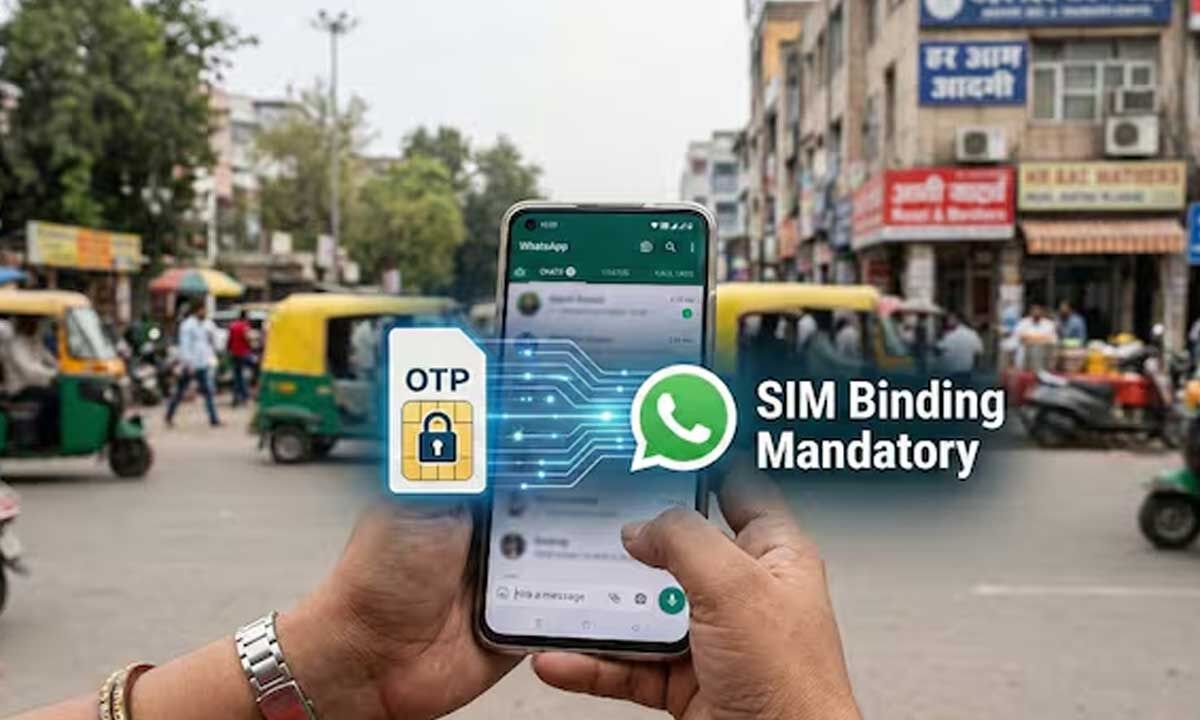
SIM Binding Rule Comes Into Effect
The Department of Telecommunications (DoT) mandate requires messaging apps to remain linked to your active SIM. Removing or swapping your SIM could lock you out until re-verification.
OMR News, March 2, 2026
What Is SIM Binding?
Under the new rule, apps such as WhatsApp, Telegram, Signal, Snapchat and similar platforms must function only when the registered SIM card is physically present and active in your smartphone. If the SIM is removed, swapped, deactivated, or replaced without proper re-verification, the app may stop working until the original SIM is reinserted and authentication is completed again.
Regulatory basis: The directive was issued by the DoT under the Telecom Cyber Security (TCS) Rules, 2024. Messaging apps are classified as "Telecommunication Identifier User Entities" (TIUEs). Companies were given 90 days to comply.
Key Changes for Users
Web & Desktop Sessions
WhatsApp Web, Telegram Web, and desktop apps must automatically log users out every 6 hours. You will need to rescan the QR code from your phone (with the active SIM inserted) to continue.
SIM Swapping & Travel
If you remove your registered SIM and use Wi-Fi only, the app may not work until the SIM is reinserted. Users travelling abroad and switching to local SIMs may face interruptions and require re-verification.
Multi-Device Use
Tablets or secondary devices without SIM support will face tighter limits. Multi-device sync remains available only if the primary device has the registered SIM inserted.
Impact on OMR Residents & IT Professionals
The Old Mahabalipuram Road (OMR) corridor is home to thousands of IT professionals, startups, and businesses who rely heavily on WhatsApp and Telegram for work communication. This rule introduces practical constraints:
- Work-from-home professionals who keep WhatsApp Web open on laptops will need to rescan every 6 hours
- Frequent travellers between Chennai and client sites may face access issues when using secondary SIMs
- Small businesses using WhatsApp Business for customer support must ensure the primary SIM stays in the designated device
- Dual-SIM users who switch between personal and work numbers may need to plan SIM placement carefully
Pro tip: Keep your registered SIM in your primary phone. For WhatsApp Web and Telegram Web users, set a reminder to re-scan before the 6-hour window if you have long work sessions.
Why the Government Introduced This Rule
The DoT states that SIM binding aims to reduce cyber fraud, digital arrests, impersonation scams, and account hijacking. Criminals have exploited messaging platforms to operate remotely from abroad, impersonating authorities or tricking victims. Linking app access to the physical SIM and device is intended to make such misuse harder.
Telecom operators have largely supported the move, while users have raised concerns about reduced flexibility. The balance between security and convenience remains a subject of debate.
Summary
- Messaging apps must stay linked to the SIM used for registration
- Web/desktop sessions log out every 6 hours — rescan QR to continue
- Removing or swapping SIM may disable app until re-verification
- Affects WhatsApp, Telegram, Signal, Snapchat and similar apps
- Government cites fraud prevention; users report reduced flexibility
Sources: NDTV, Money Control, Department of Telecommunications (DoT), Telecom Cyber Security Rules 2024
If you have information about tech or policy developments affecting the OMR community, share it with us. MyOMR welcomes collective journalism involving all stakeholders of the OMR corridor.