What the court ordered
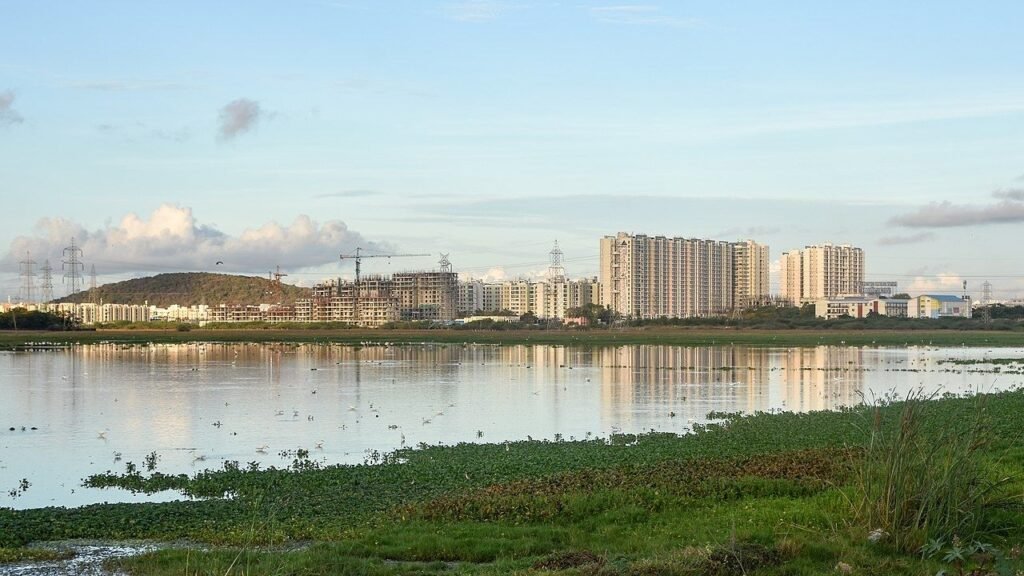
The First Division Bench of the Madras High Court directed a temporary halt to construction at a private high-rise project abutting the Pallikaranai marsh, a Ramsar-designated wetland. The pause remains in force until authorities finish a ground truthing exercise to fix the wetland's legally valid boundaries.
Why ground truthing matters
Ground truthing compares satellite imagery with on-site field observations to confirm what is wetland and what is not. The National Centre for Sustainable Coastal Management (NCSCM) has been running this process since late 2024 and expects to complete it within two weeks.
Scale of Pallikaranai: About 698 hectares are notified as reserve forest; another ~550 hectares are to be delineated to complete the 1,248‑hectare Ramsar site envelope.
Positions before the court
- Petitioner: Building high-rises within prohibited wetland influence zones violates conservation norms; approvals should be revisited.
- State (A-G): CMDA granted plan approval after SEIAA environmental clearance; final boundary fixation is underway through ground truthing as directed by higher courts.
- Developer: The plot is a dry, privately held patta land (since the 1980s) and not a wetland; it obtained approvals after lengthy due process.
Broader legal backdrop
The Supreme Court and the National Green Tribunal have separately asked Tamil Nadu to expedite boundary delineation for the marsh. The High Court has now synchronized its interim pause with the two‑week completion window for ground verification.
What this means for OMR residents
- Short term: No construction activity at the contested site until November 12.
- Near term: Final ground‑truth boundaries will clarify what falls within the Ramsar site or its zone of influence.
- Long term: Clearer rules for development near the marsh, balancing housing needs with wetland protection.
Hearing is scheduled to resume on November 12, when the court will review the status of the boundary exercise.
Editor's note: This report is an independent summary created by MyOMR to inform local readers. It reframes facts in original language to avoid duplication while preserving public-interest details.
Source: The Hindu