In what could be described as Chennai's most ambitious environmental restoration project, the Perungudi landfill is undergoing a remarkable metamorphosis. After five decades of accumulating waste that threatened the ecological balance of neighboring Pallikaranai marshland, this 226-acre dumpyard is now being systematically converted into a circular economy showcase. What was once a symbol of urban neglect is becoming a blueprint for sustainable waste management across India.
Understanding the Scale: Five Decades of Accumulation
Chennai generates approximately 5,500 tonnes of solid waste daily, with Perungudi and Kodungaiyur serving as the city's primary disposal sites since the 1970s. Over the years, the Perungudi dumpyard accumulated an estimated 30 lakh cubic metres of legacy waste – equivalent to filling hundreds of Olympic-sized swimming pools. This massive accumulation created several critical problems:
- Air quality degradation: Since 2004, environmental studies detected 27 toxic chemicals in the vicinity, including three known carcinogens, making the area hazardous for nearby residents in Perungudi, Thoraipakkam, and Pallikaranai.
- Groundwater contamination: Leachate from the rotting waste posed risks to Chennai's already stressed groundwater reserves.
- Ecosystem threat: The dumpyard's proximity to Pallikaranai marshland – a Ramsar wetland supporting 115 bird species, 46 fish species, 21 reptile species, and over 100 plant varieties – created a severe environmental crisis.
- Flood risk: The waste mountain interfered with the marshland's natural flood management capacity, which serves as Chennai's rainwater harvesting system.
The Biomining Solution: Waste No Longer Just Waste
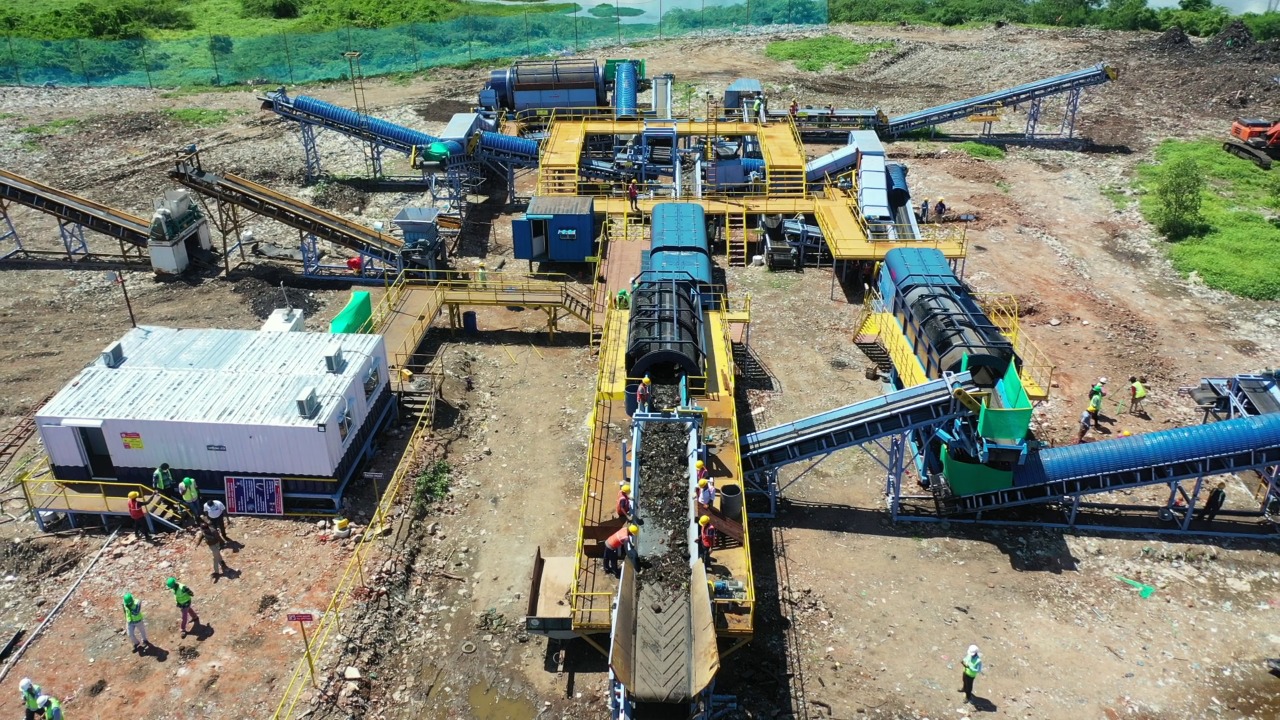
In November 2020, the Greater Chennai Corporation (GCC) initiated a groundbreaking biomining project to tackle the accumulated legacy waste. The project, divided into six packages, was awarded with a 40-month completion timeline. Blue Planet Environmental Solutions (formerly Zigma Environmental Solutions) secured three of the six packages, covering over 16 lakh tonnes of waste spanning 93 acres.
The biomining process involves sophisticated waste processing methodology that transforms waste into manageable materials ready for repurposing. The excavated waste is organized into manageable windrows, systematically raked and treated with bio-culture to neutralize odour, reduce moisture content, and control disease vectors.
From Trash to Treasure: The Circular Economy Products
What makes the Perungudi transformation remarkable is the innovative repurposing of waste materials into commercial products:
Furniture from Plastic Waste
At Blue Planet's Coimbatore facility, non-recyclable plastics – specifically HDPE, LDPE, and LLDPE variants that cannot be conventionally recycled – are transformed into sturdy furniture through an extrusion process. This plastic lumber technology converts waste into benches, chairs, and tables suitable for outdoor use, as well as decking and wall cladding materials for construction. These products are designed to be recycled again if damaged, creating true circular economy loops.
Construction Materials Recovery
- Processed soil: The recovered soil undergoes specialized cleaning and treatment to match construction-grade standards. It's now being supplied to leading Chennai construction companies as an alternative to river sand, helping protect river ecosystems from destructive sand mining.
- Recycled stones: Over 2.18 million tonnes of stones extracted from the dumpyard are being reused in concrete structures throughout Chennai. Some stones have been shaped into ramps up to 20 meters long for park landscapes.
- Metal recovery: 2,301 tonnes of steel scrap have been recycled into utensils and hardware components.
- Glass recycling: 3,454 tonnes of glass waste have been refurbished into bottles ranging from 200ml to 500ml capacity.
Environmental Impact: CO₂ Reduction & Land Reclamation
Beyond material recovery, the biomining project delivers significant environmental benefits:
Carbon Footprint Reduction
Refuse-Derived Fuel (RDF) extracted from the waste is being used as an alternative fuel in cement manufacturing facilities. This substitution has averted approximately 55,944 tonnes of CO₂ emissions – equivalent to removing over 12,000 passenger vehicles from the road for a year. The RDF approach demonstrates how waste-to-energy can contribute to industrial decarbonization while reducing landfill methane emissions.
Land Reclamation Success
As of recent updates, the project has successfully reclaimed 96 acres out of the 226-acre dumpyard. This reclaimed land is being repurposed for green spaces, public parks, and infrastructure development. The fine soil recovered from the waste is being used to create lake bunds, median plantations, and park landscapes throughout Chennai.
• Waste processed: 1.7 million cubic metres cleared and treated
• Land reclaimed: 96 acres restored and repurposed
• CO₂ emissions averted: 55,944 tonnes prevented
• Processing rate: Approximately 1,000 tonnes of waste processed daily
What This Means for OMR Residents
For residents living in Perungudi, Thoraipakkam, Pallikaranai, Karapakkam, and Sholinganallur, the transformation brings several tangible benefits:
- Improved air quality: Removal of toxic waste reduces airborne pollutants and health hazards
- Enhanced flood protection: Restored marshland function improves flood management during monsoon seasons
- Better quality of life: Reduction in odour, flies, and disease vectors improves overall living conditions
- New green spaces: Reclaimed land offers opportunities for parks and recreational facilities
- Water quality improvement: Reduced leachate contamination protects groundwater resources
This is an ongoing environmental restoration project. We will update this article as new developments emerge and more land is reclaimed at the Perungudi dumpyard.